ENV-KUWAIT-SUSTAINABLITYKuwait strengthens environmental sustainability through strategic initiativesBy Zahra Al-Kadhmi

HLT-KUWAIT-SURGERYKuwait advances health sector with robotic, remote surgeryBy Mohammad Al-Moseb

Saudi Arabia’s Voluntary Carbon Market Fuels the Shift to a Low-Carbon

Under UAE President’s directives, UAE launches urgent relief response for Ghana flood victims

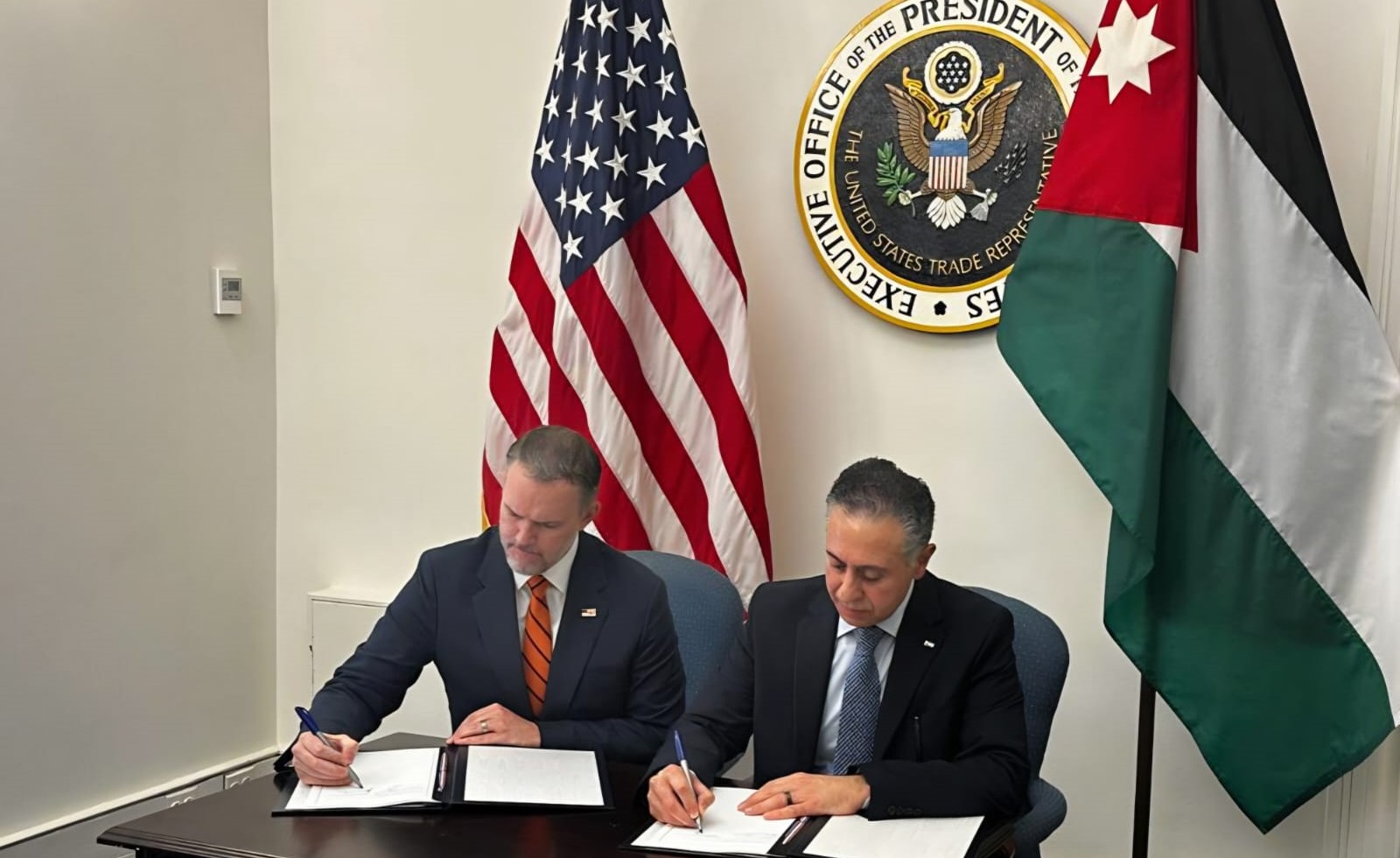
Washington DC, July 21 (Petra) – Jordan and the United States signed
a Reciprocal Trade Agreement Tuesday aimed at bolstering bilateral
economic relations and granting exporters in both nations expanded
access to each other’s markets.
The Agreement, which follows nearly a year of consultations, builds
on the long-standing economic partnership between the two countries,
including the landmark U.S.-Jordan Free Trade Agreement that entered
into force on December 17, 2001.
The Agreement was signed in Washington by Jordan’s Minister of
Industry, Trade, and Supply, Yarub Qudah, and United States Trade
Representative Jamieson Greer.
Designed to streamline trade flows, the pact will drive Jordanian
exports to the U.S., particularly in ready-made garments and
textiles, while easing the entry of American goods into the Jordanian
market, including agricultural products and motor vehicles.
Under the key provisions signed today, the U.S. commits to capping
reciprocal tariffs on Jordanian imports at 10% and granting all
segments of Jordan’s textile and apparel sector enhanced preferential
access to the American market. This is expected to significantly
boost Jordanian exports to the U.S., which reached 595 million JOD in
the first four months of this year, led by garments, textiles,
jewelry, machinery, electrical equipment, and pharmaceuticals.
In return, Jordan will continue to offer duty-free treatment for U.S.
exports under the framework of the 2001 Free Trade Agreement. The
deal also introduces measures to smooth trade operations through
strict enforcement of environmental laws, protection of labor rights,
robust intellectual property rights, fair trade practices, and
modernized customs procedures, while eliminating non-tariff barriers
to expand market access for U.S. goods.
Looking ahead, both sides will continue discussions on services trade
and investment to dismantle remaining trade barriers and foster
bilateral investment flows. Recognizing the critical role of high
standards in the digital age, both nations pledged to support an
open, competitive digital economy, with Jordan committing to refrain
from imposing taxes or tariffs on digital services and to support the
WTO moratorium on customs duties on electronic transmissions.
Furthermore, Jordan and the U.S. will reinforce supply chain
resilience and drive innovation by coordinating on policies that
impact global trade, alongside joint efforts in investment security,
export controls, and combating duty evasion.
This Agreement builds on a series of recent commercial deals that
underline the deepening economic synergy between both nations. These
include Royal Jordanian Airlines’ $1.4 billion purchase of six Boeing
787-9 Dreamliners and $500 million long-term lease agreements for
additional aircraft, Jordanian pharmaceutical giant Hikma’s
commitment to invest $1 billion in the U.S. by 2030, and agreements
by Jordanian companies to procure over $300 million in U.S. raw
materials annually.
//Petra// AA