Saudi Arabia’s Voluntary Carbon Market Fuels the Shift to a Low-Carbon
Under UAE President’s directives, UAE launches urgent relief response for Ghana flood victims

Combating Desertification and Drought: Qatar a Model in Preserving Natural Resources, Establishing Environmental Stability
UAE allocates US$30 million for emergency humanitarian response in El Obeid, calls for civilian protection, safe humanitarian aid access in Sudan

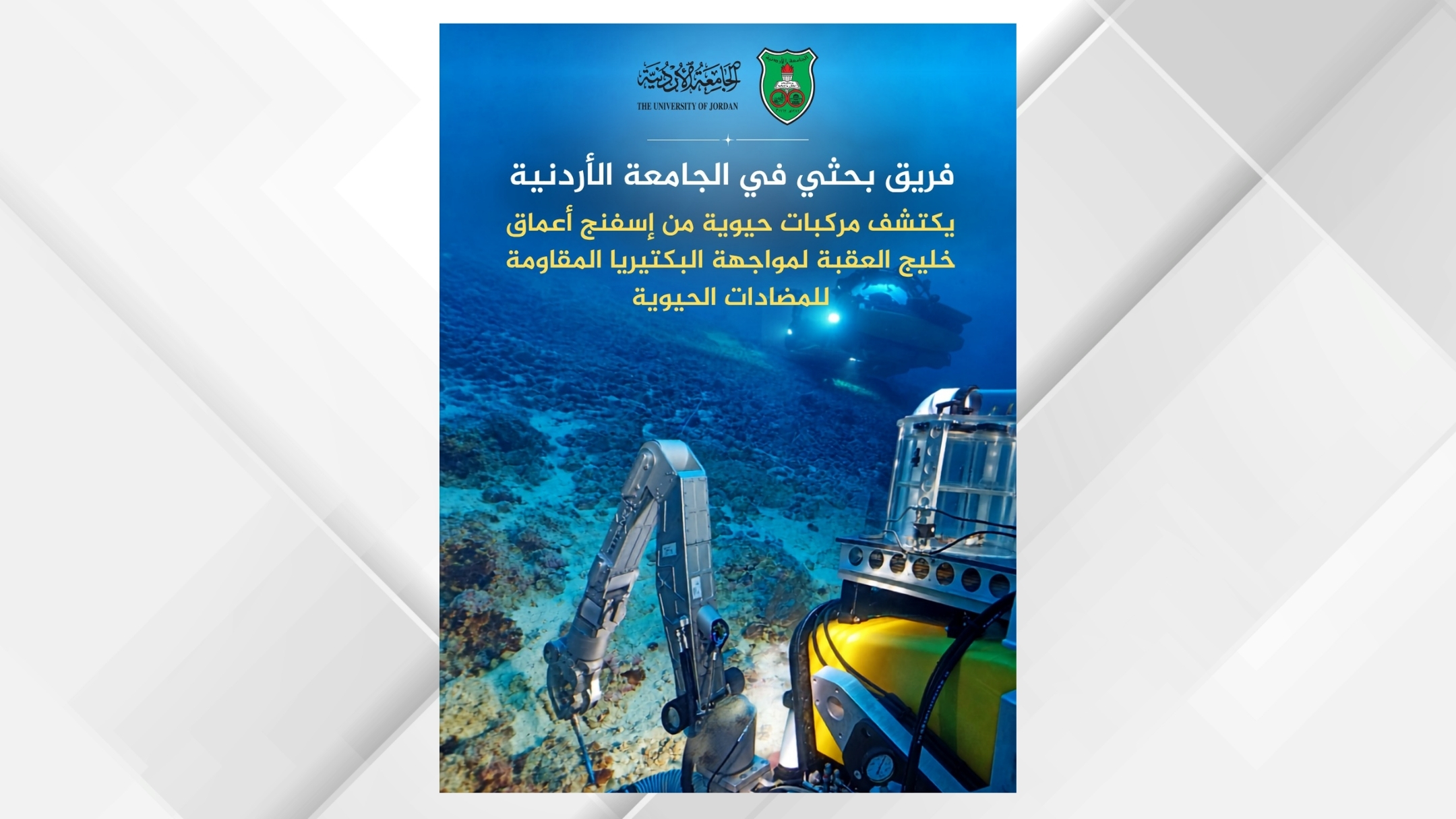
Amman, Sept. 10 (Petra) — A research team at the University of
Jordan has identified natural bioactive compounds from rare marine
sponges collected in the deep waters of the Gulf of Aqaba that showed
antibacterial activity, including against antibiotic-resistant
strains.
According to a university statement, the findings could support
further drug-discovery research based on Jordan’s marine biodiversity
at a time of growing global concern over antimicrobial resistance.
The research was led by head of the Laboratory of Microbial and
Molecular Ecology (LaMME) and professor of microbial and molecular
ecology at the School of Science’s Department of Biological Sciences
Mamoun Rshaidat, and professor of molecular pharmacology at the
School of Medicine Malek Zihlif.
The work was based on research conducted as part of the doctoral
dissertations of Razan Abu Assaf and Fatima Jamal.
Marine sponge samples were collected in July 2022 during an
expedition aboard the OceanXplorer vessel, in cooperation with the
university’s Molecular Pharmacology Research in Personalized Medicine
group and national and international partners.
Researchers used crewed submersibles equipped with robotic arms to
collect samples at depths ranging from 140 to 362 meters below sea
level, where water temperatures ranged between 21.1 and 22.5 degrees
Celsius. The Aqaba Special Economic Zone Authority provided
logistical support for the fieldwork.
The samples were preserved at low temperatures in ethanol before
undergoing genetic analysis using DNA barcoding and comparison with
international databases. The process identified three main sponge
types: Stelletta sp., Dactylospongia sp., and Haliclona sp.
Laboratory tests showed that extracts from Dactylospongia sp. had
strong inhibitory activity against Gram-positive bacteria,
particularly methicillin-resistant Staphylococcus aureus (MRSA), with
inhibition zones ranging from 6 to 21 millimeters.
Liquid chromatography-tandem mass spectrometry (LC-MS/MS) analysis
detected around 40 bioactive compounds, including gallic acid,
caffeic acid, quinone compounds, and the marine alkaloid Manzamine A.
Researchers are also examining sustainable methods for producing
these compounds using genetic and chemical techniques to reduce the
need for large-scale harvesting of marine sponges and limit pressure
on marine biodiversity.
The university indicated that further research could help assess the
compounds’ potential for biotechnology and medical applications and
determine whether they could be developed into viable therapeutic
candidates.
//Petra// AO