ENV-KUWAIT-SUSTAINABLITYKuwait strengthens environmental sustainability through strategic initiativesBy Zahra Al-Kadhmi

HLT-KUWAIT-SURGERYKuwait advances health sector with robotic, remote surgeryBy Mohammad Al-Moseb

Saudi Arabia’s Voluntary Carbon Market Fuels the Shift to a Low-Carbon

Under UAE President’s directives, UAE launches urgent relief response for Ghana flood victims

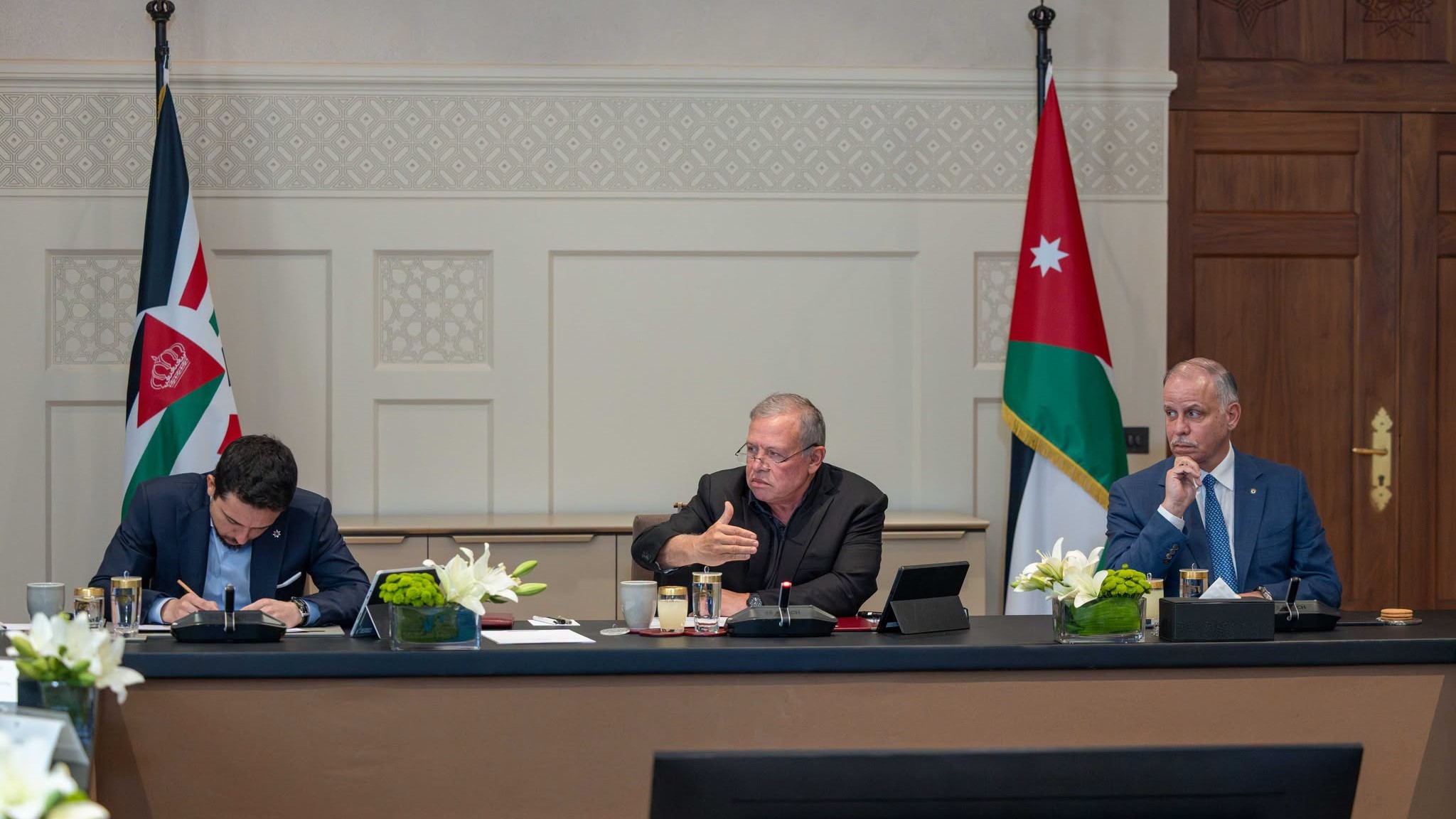
Amman, Aug. 4 (Petra) – His Majesty King Abdullah II has called for a
proactive approach to bolster the kingdom’s food security by ensuring
strategic food reserves remain sufficient and safe to cover national
needs for extended periods while continuously monitoring markets,
supply chains, domestic production, and inventory management and
preparing to address price increases that may precede, accompany, or
follow crises.
The directive came after the king chaired a meeting to review
government measures aimed at strengthening energy and food security.
The approach underscores that food security extends beyond the
availability of commodities to building adequate and secure strategic
reserves; continuously monitoring markets, domestic production, and
supply chains; and developing proactive plans to ensure sustainable
supplies and enhance Jordan’s ability to manage crises and their
repercussions before, during, and after they occur.
Minister of Agriculture Saeb Khraisat told the Jordan News Agency
(Petra) that the king reviewed government measures to safeguard food
security, including proactive planning, inventory management, and the
importance of partnership with the private sector. He said the king
stressed that food reserves must remain sufficient, continuously
available, safe, and of high quality.
Khraisat said the Higher Council for Food Security holds regular
meetings, including sessions dedicated to continuously updating plans
to secure strategic reserves at reasonable prices.
Jordan has achieved self-sufficiency in several agricultural
commodities, including fruits and vegetables, with production of some
items reaching 119% of domestic demand, he said. Surplus production
has been exported to support farmers, while agricultural exports rose
18% in the first half of 2026 compared with the same period last
year.
He said the government’s food security plans are based on consumption
needs, with weekly meetings under the agricultural calendar framework
monitoring production, consumption, and export volumes to guide
decisions that protect strategic food reserves over safe and adequate
timeframes.
Khraisat said recent reports issued by the UN Food and Agriculture
Organization (FAO) place Jordan in a strong position across several
indicators related to healthy diets and food safety. He said the
assessments, based on monitoring production, reserves, and a broad
range of performance indicators, reflected the country’s
implementation of clear strategies, effective governance, and
measures to ensure safe food supplies.
Jordan has also recorded a bumper harvest this year, with wheat and
barley production reaching 120,000 tonnes so far and expected to
increase to 130,000 tonnes in the coming days, roughly three times
the levels recorded in previous years, he said.
The government has supported farmers by purchasing wheat and barley
at JD520 ($733) per tonne, compared with a global price of about
JD270, to encourage cultivation of these strategic crops.
Khraisat said Jordan now holds grain stocks sufficient for a full
year, well above the three to four months generally considered
adequate. He added that the king had placed particular emphasis on
ensuring both the availability and safety of food, noting that the
Ministry of Agriculture maintains strict oversight of strategic
reserves, including meat supplies.
He said the government continuously monitors inventories, replenishes
stocks as they are consumed, and maintains reserves at levels
considered safe and sufficient.
Khraisat said His Majesty the King consistently stresses the
importance of partnership with the private sector, describing the
relationship as complementary and based on the highest levels of
coordination and support to ensure continuous, adequate, and secure
food reserves.
Fadel Al-Zubi, former FAO ambassador to the United Nations and
secretary-general of the National Alliance Against Hunger and
Malnutrition (Najmah), said the king’s remarks amounted to strategic
governance designed to prepare Jordan for future shocks and crises by
managing food security reserves through a continuously updated
information system tracking developments in Jordan, the region, and
globally.
He said the king has maintained a strong focus on food security since
the 2008 global financial crisis, through subsequent challenges
including refugee inflows, the COVID-19 pandemic, the Russia-Ukraine
war, the Oct. 7, 2023 events, the Iran-U.S.-Israel conflict,
disruptions in the Strait of Hormuz, and damage to global supply
chains. He said Jordan’s preparedness under the king’s leadership had
enabled the country to maintain food security throughout those
crises.
Al-Zubi said Jordan ranks highly on four global food security
indicators and has consistently maintained full marks for strategic
reserves during successive crises. He said reserves of some
commodities are sufficient for up to 12 months, exceeding regional
performance despite repeated external shocks.
He said Jordan’s progress was the result of sound planning, a
comprehensive social protection system, policies aimed at
safeguarding citizens’ welfare, a strategic reserve policy covering
up to 12 months, and a strong food safety framework.
Al-Zubi said the king had highlighted two essential principles for
food security: that reserves should be “sufficient” and “safe.” He
said these principles imply maintaining stocks covering eight to 10
months, with secure reserves extending to 12 months, while
continuously monitoring markets, supply chains, domestic production,
and inventories and preparing measures to protect citizens from price
increases before, during, and after regional crises.
He added that the king had emphasized proactive food security
planning to protect strategic reserves and shield public finances
from sharp price increases while strengthening partnerships with the
private sector to secure, store, and improve the management of food
reserves, making food security one of the Jordanian state’s highest
priorities.
Following the COVID-19 pandemic, Jordan adopted a nine-year National
Food Security Strategy covering 2021-2030 under direct directives
from His Majesty King Abdullah. The strategy identifies agriculture
as the cornerstone of food security while recognizing the expanded
role of the industrial and commercial private sector in ensuring
sustainable food supplies in a country facing severe water scarcity.
The strategy also addresses challenges stemming from regional
conflicts, forced displacement, disrupted supply chains, and climate
change, all of which have placed increasing pressure on food
production.
Jordanian institutions have implemented the strategy and its
proactive plans, enabling the country to navigate the COVID-19
pandemic, ongoing regional instability, and the Russia-Ukraine war.
Authorities have adapted to changing conditions through close
public-private cooperation to ensure the availability of high-quality
food at reasonable prices despite global inflationary pressures.
In 2020, His Majesty King Abdullah presented a set of principles
during the Borlaug Dialogue that later served as a roadmap for
addressing the impact of crises on food security at the regional and
international levels. The Jordanian government used those principles
in developing the National Food Security Strategy and its
implementation plan, beginning with the establishment of the National
Food Security Committee in cooperation with ministries, government
agencies, the private sector, civil society organizations,
international organizations, and development partners.
Jordan later institutionalized food security through the
establishment of the Higher Council for Food Security, contributing
to improved performance on international food security indicators and
elevating the issue to a national priority amid urbanization,
globalization, climate change, volatile global prices, and the Syrian
refugee crisis.
Jordan’s first agricultural policy, introduced in 1992, focused on
food security, followed by numerous studies and reports commissioned
by local and international organizations.
The National Food Security Strategy is intended as a direct response
to the country’s highest-level priority of strengthening food
security and as a framework for national and international
cooperation, recognizing food security as an integral component and
prerequisite for national, human, and regional security.
The strategy also seeks to position Jordan as a regional food
security hub by developing storage capacity, logistics services,
agricultural production, food processing, irrigation systems,
greenhouse farming, technology transfer, and emergency support
services for countries across the region.
//Petra// AF