Jordan’s Q2 2026 GDP Expands 3.0%, Outperforming Regional Headwinds, International Forecasts
ENV-KUWAIT-SUSTAINABLITYKuwait strengthens environmental sustainability through strategic initiativesBy Zahra Al-Kadhmi

HLT-KUWAIT-SURGERYKuwait advances health sector with robotic, remote surgeryBy Mohammad Al-Moseb

Saudi Arabia’s Voluntary Carbon Market Fuels the Shift to a Low-Carbon

Amman, Sept. 30 (Petra) — The project “Strengthening National
Institutional Capacities to Implement the Recognition of Prior
Learning (RPL) Program in the Technical and Vocational Education and
Training (TVET) Sector” concluded Wednesday in Amman. The project was
organized by the Jordan River Foundation (JRF) in partnership with
the International Labour Organization (ILO) and under the supervision
of the Accreditation and Quality Assurance Commission (AQAC).
The project was implemented over two years with support from the
Dutch Embassy in Amman, aiming to strengthen the system for
recognizing skills and experience individuals acquire through work
and non-formal and informal learning and converting them into
recognized qualifications in accordance with the National
Qualifications Framework (NQF).
The project worked in two integrated phases. The first focused on
enhancing the commission’s capacity to apply a system that allows
individuals to prove and have recognized the skills and experience
they acquired through work and non-formal and informal learning in
accordance with the NQF, developing its tools, procedures, assessment
mechanisms, and certification, along with preparing guides,
implementing a national awareness campaign, and building the
capacities of 50 assessors and 20 administrators from the
commission’s staff and relevant entities to enable them to implement
RPL procedures.
In its second phase, the project moved to the actual application of
the system and testing its effectiveness and suitability in six
sectors: agriculture, hospitality and tourism, logistics,
construction, beauty, and car maintenance, in the governorates of
Amman, Balqa, Mafraq, Aqaba, and Irbid.
As part of developing the system’s services, a self-assessment portal
for RPL was launched in coordination with the Ministry of Digital
Economy and Entrepreneurship and the AQAC to allow applications to be
submitted and followed up electronically. The work also included
developing application mechanisms and a draft of instructions and
relevant legal foundations to support the system’s sustainability and
future expansion.
More than 850 beneficiaries have so far obtained professional
practice certificates after undergoing theoretical and practical
assessment, enhancing their chances of proving their competencies and
entering the labor market.
AQAC Assistant President Yousef Al-Abdallat stressed that the project
represents an important step toward building a national system for
recognizing skills and experience acquired from various learning and
work pathways, noting that the AQAC looks forward to a fundamental
role in developing this system and ensuring the quality of its
outputs according to clear standards, enhancing the alignment of
skills with labor market needs and supporting individuals’
opportunities for training, employment, and decent work.
He noted that developing the RPL system comes within a broader
orientation to promote lifelong learning and provide more flexible
pathways for recognizing and developing skills and competencies,
including micro-credentials, which represent one of the modern tools
for documenting acquired skills and competencies, responding to rapid
changes in national and global labor market needs, and supporting the
national economy.
He pointed out that the next phase will focus on building on the
capacities, tools, and mechanisms achieved and moving to application,
expansion, and sustainability through continued cooperation between
national entities and international partners, contributing to
developing the TVET system and academic institutions and enhancing
their ability to respond to individuals’ and labor market
requirements.
For his part, JRF Programs Sector Director Mahmoud Al-Karaki said
that, based on the Jordan River Foundation’s commitment to supporting
the Kingdom’s priorities in economic development and community
empowerment, the importance of recognizing prior learning as an
effective tool for benefiting from the accumulated skills and
experience of individuals is affirmed, in line with national
priorities and the Economic Modernization Vision. Hence the
foundation’s role in continuously seeking to unify efforts with
various relevant entities to enhance individuals’ ability to access
sustainable economic opportunities.
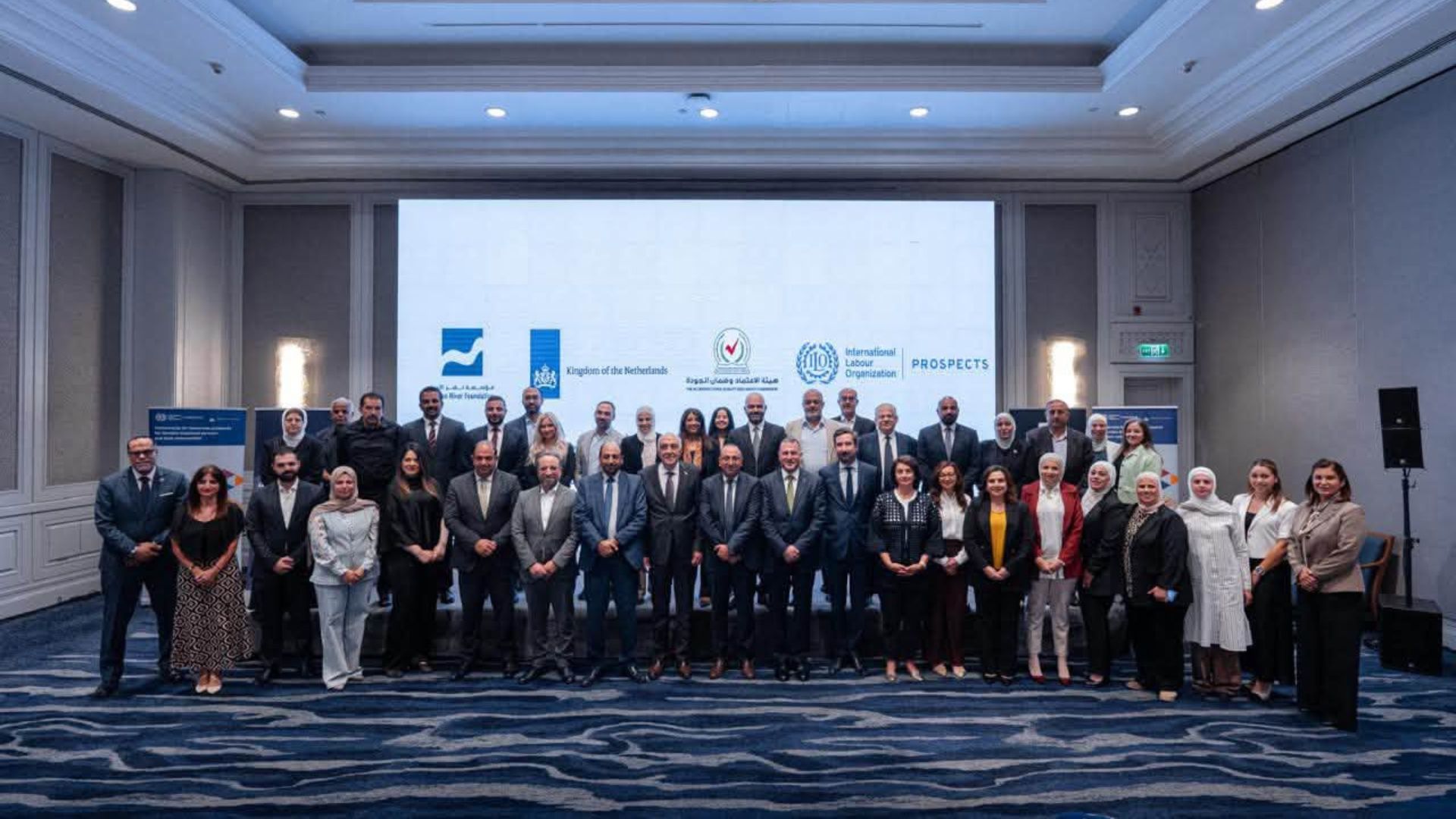
The project concluded during a ceremony held in Amman, attended by
representatives of the commission, national governmental and civil
institutions, partners, and relevant and supporting entities.
//Petra// AF