Jordan’s Q2 2026 GDP Expands 3.0%, Outperforming Regional Headwinds, International Forecasts
ENV-KUWAIT-SUSTAINABLITYKuwait strengthens environmental sustainability through strategic initiativesBy Zahra Al-Kadhmi

HLT-KUWAIT-SURGERYKuwait advances health sector with robotic, remote surgeryBy Mohammad Al-Moseb

Saudi Arabia’s Voluntary Carbon Market Fuels the Shift to a Low-Carbon

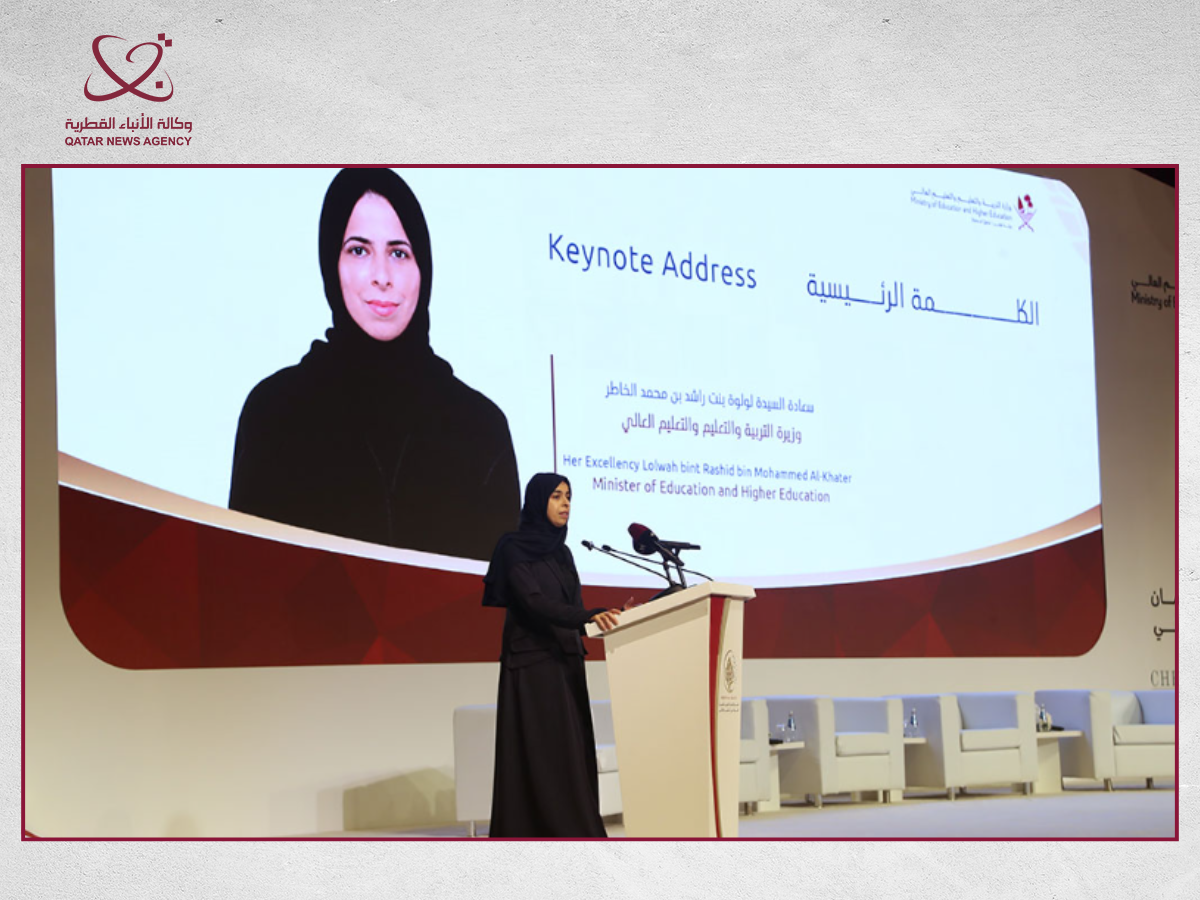
Doha, October 08 (QNA) – HE Minister of Education and Higher Education Lolwah bint Rashid bin Mohammed Al Khater affirmed that the concept of quality in education was no longer limited to meeting requirements, but has become linked to the extent of the educational process’s impact on students, institutions and society.
Speaking at the Arab Network for Quality Assurance in Higher Education Forum, held in Doha, Her Excellency said that since its establishment in 2022, the National Committee for Qualifications and Academic Accreditation has been keen to benefit from regional and international expertise and experiences. She noted that more than 50 percent of higher education institutions in Qatar are now engaged in the committee’s processes, whether as accredited institutions, candidates for accreditation or institutions preparing their self-study reports.
Her Excellency pointed out that higher education systems in the Arab region comprise more than 13 million students across approximately 1,200 higher education institutions, noting that the scale of these systems and the diversity of their institutions and programmes make quality assurance an increasingly urgent and important issue.
Her Excellency added that the forum is discussing more than 50 research papers, with active participation from higher education institutions in Qatar, reflecting a shared academic commitment to exchanging expertise and keeping pace with transformations in the sector.
She added that several research papers and accompanying workshops were re-examining quality assurance concepts and tools. Among the key areas under discussion were authentic assessment and safeguarding academic integrity amid the growing use of artificial intelligence tools capable of generating texts and answering questions. This, HE the Minister noted, requires a greater focus on measuring what students have actually learned and their ability to apply knowledge.
Her Excellency also said that the forum was also examining the use of data and analytics to support quality assurance and academic accreditation processes, including tools for tracking enrolment, retention and graduation, as well as analysing institutional evidence. She stressed that these tools support decision-making without replacing human expertise.
Her Excellency noted that the shift from compliance with standards to measuring the actual impact of education is one of the forum’s main themes. She added that integrating these approaches contributes to shaping a new concept of academic accreditation that goes beyond periodic document reviews to continuously measuring educational impact through the use of modern technologies.
Her Excellency expressed hope that the forum’s recommendations would help translate scientific research findings into practical applications that support higher education institutions in anticipating the future, harnessing artificial intelligence to serve science and humanity, and achieving a sustainable impact on communities.
For her part, Dr. Jokha Abdullah Hamoud Al Shukaili, President of the Arab Network for Quality Assurance in Higher Education, affirmed that artificial intelligence applications and digital transformation have become an integral part of learning, scientific research and knowledge production.
She noted that the real challenge lies not in accepting or rejecting artificial intelligence, but in how to use it responsibly and ethically to enhance learning, develop capabilities and, at the same time, preserve the originality of academic work and the credibility of its outcomes. She stressed the need to develop assessment methods capable of measuring analytical, critical thinking, creative and problem-solving skills.
For his part, Chairman of the National Committee for Qualifications and Academic Accreditation Professor Dr. Mazen Omar Hasna affirmed that Qatar’s hosting of the forum reflected the committee’s commitment to strengthening cooperation and engagement with regional and international networks specializing in quality assurance and the exchange of expertise.
He noted that the forum attracted broad participation, with 86 research papers submitted, of which 56 were accepted, alongside four specialised workshops and more than 500 registered participants. He stressed that the forum’s real value lies in exchanging expertise and experiences that contribute to developing higher education institutions and serving students and communities.
The Arab Network for Quality Assurance in Higher Education Forum, organised by the National Committee for Qualifications and Academic Accreditation in cooperation with the Council for Higher Education Accreditation in the United States, brings together leading experts, academics and representatives of quality assurance and academic accreditation bodies from Arab countries and around the world.
The forum discussed the future of academic accreditation and quality assurance in higher education institutions amid rapid developments in artificial intelligence and digital transformation, while exploring the opportunities and challenges these changes present for higher education systems across the region. (QNA)