Saudi Arabia’s Voluntary Carbon Market Fuels the Shift to a Low-Carbon

Under UAE President’s directives, UAE launches urgent relief response for Ghana flood victims

Combating Desertification and Drought: Qatar a Model in Preserving Natural Resources, Establishing Environmental Stability
UAE allocates US$30 million for emergency humanitarian response in El Obeid, calls for civilian protection, safe humanitarian aid access in Sudan

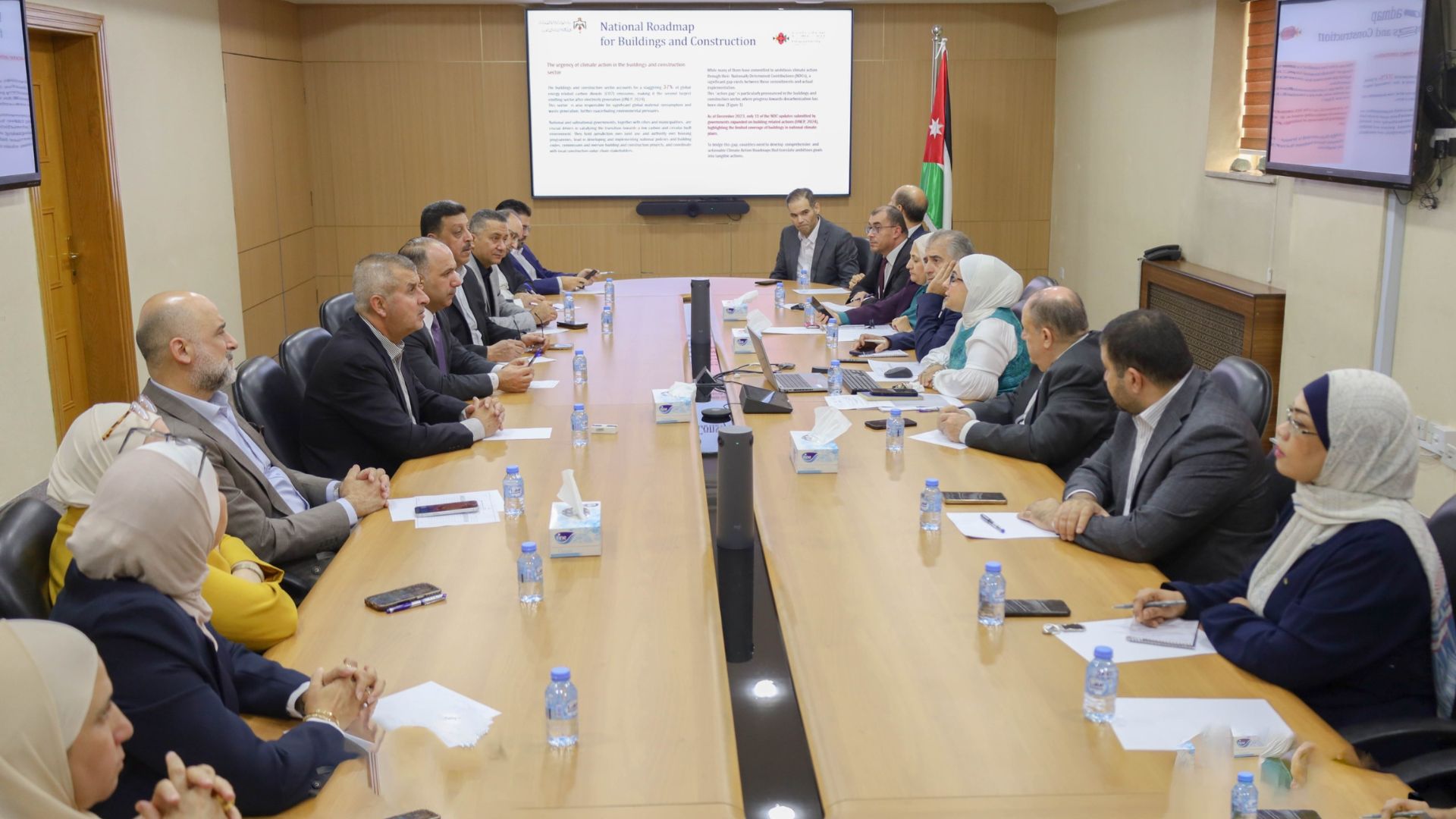
Amman, Sept. 14 (Petra) — Minister of Energy and Mineral Resources
Saleh Kharabsheh on Monday chaired a meeting of the Public-Private
Partnership Council for the energy sector to discuss the National
Road Map for Buildings and Construction, which aims to reduce
emissions from existing and new buildings.
The National Road Map for Buildings and Construction aims to
stimulate climate action in the sector and support Jordan’s
transition toward a low-carbon future. It was developed under the
Jordanian-German Energy Partnership, in cooperation with the German
Energy Agency (dena), and seeks to support the transition toward more
energy-efficient, low-emission buildings.
Kharabsheh underlined that green building presents a significant
opportunity to reduce the energy bill in the buildings sector,
stressing that energy efficiency should be an integral part of the
planning, design, and construction stages.
He noted that applying green building codes and standards in the
buildings sector is not currently mandatory, but could become a
global requirement, underscoring the need for Jordan to prepare for
such requirements, particularly in the industrial buildings sector.
Kharabsheh highlighted the importance of the national road map in
establishing a clear framework for transitioning to more
energy-efficient and lower-emission buildings, while capitalizing on
opportunities in energy efficiency, renewable energy, and modern
technologies. Such measures, he noted , would help reduce energy
costs and enhance the competitiveness of economic sectors.
Lina Mubaideen, director of the Energy Efficiency and Climate Change
Directorate, stated that the buildings and construction sector
accounts for more than 40% of Jordan’s total final energy consumption
and more than 60% of electricity consumption, making it one of the
sectors with the greatest impact on energy use and carbon emissions.
More than 70% of buildings in Jordan were constructed before
energy-efficiency codes were adopted, Mubaideen said, creating
significant potential for improvement through retrofitting existing
buildings and applying the required codes and standards to new
construction.
She pointed out that the ministry has launched three national
energy-efficiency plans, in addition to the National Green Growth
Plan, which seeks to reduce emissions. Jordan has also adopted green
building and energy-efficiency codes and is gradually applying them
to government projects and new buildings.
The development of the national road map is a key step toward
establishing the policies and implementation frameworks needed to
advance the buildings and construction sector, in line with national
efforts to promote buildings that are more energy efficient,
sustainable, and climate resilient, Mubaideen added.
She stressed that implementing the road map requires effective
public-private partnerships, along with investment in modern
technologies and innovative financing models to accelerate
energy-efficiency projects and building retrofits, and reduce energy
costs for citizens and businesses.
Mubaideen added that Jordan is developing an integrated framework to
support the transition to buildings that are more energy efficient,
sustainable, and resilient to the impacts of climate change through
policy and legislative development and stronger partnerships with
relevant stakeholders.
The meeting also discussed amendments to the 2017 instructions
governing the licensing of energy auditing activities. The amendments
aim to facilitate the licensing of first- and second-category energy
auditing firms and enable a larger number of companies to obtain
licenses.
//Petra// AJ