Saudi Arabia’s Voluntary Carbon Market Fuels the Shift to a Low-Carbon
Under UAE President’s directives, UAE launches urgent relief response for Ghana flood victims
Combating Desertification and Drought: Qatar a Model in Preserving Natural Resources, Establishing Environmental Stability
UAE allocates US$30 million for emergency humanitarian response in El Obeid, calls for civilian protection, safe humanitarian aid access in Sudan

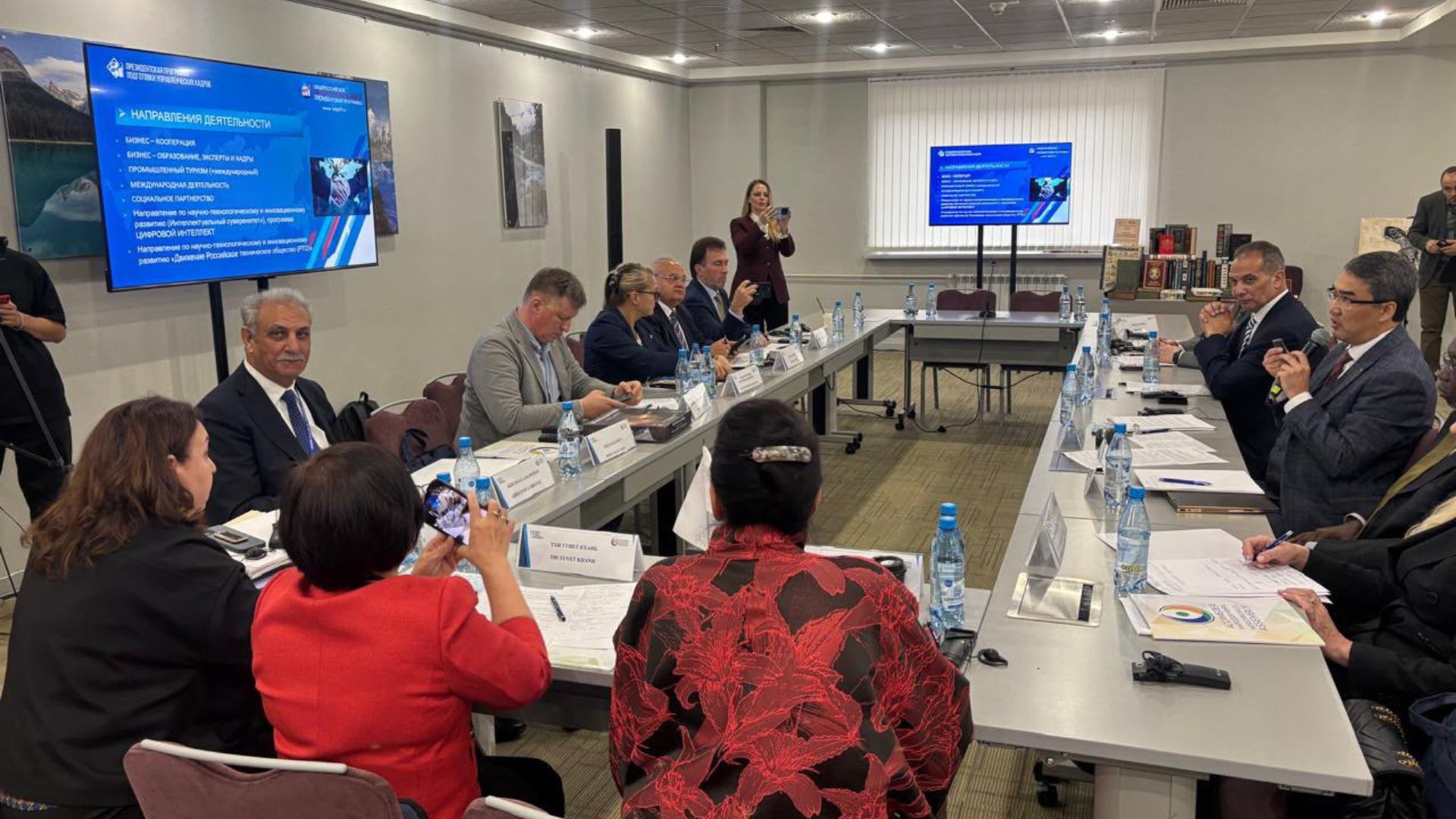
Amman, Sept. 19 (Petra) — Chairman of the Jordanian-Russian
Parliamentary Friendship Association MP Abdul Hadi Breizat
participated in four sessions over two days as part of the World
People Assembly held in Moscow, focusing on peace and traditional
values, health amid global challenges and crises, scientific,
educational, and trade partnerships in Greater Eurasia, and
international tourism and prospects for development and cooperation.
Speaking at a session titled “Building an International Community of
Ambassadors for Traditional Values,” Breizat said Jordan’s experience
stands out as that of a state that has made moderation and dialogue
an integral part of its domestic and foreign policy.
He said His King Abdullah II has for years carried a clear message in
confronting extremism and calling for recognition of others and
respect for religious and cultural diversity.
Breizat said this approach has led to Jordanian initiatives with
global reach, including the Amman Message and the World Interfaith
Harmony Week, which was adopted by the United Nations General
Assembly following a Jordanian initiative.
At a session titled “Health Preservation in New Protocols of the
State, Science, and Society,” Breizat said the COVID-19 pandemic had
taught the world that health security was no longer solely a national
concern, noting that a virus emerging in one place could, within
days, develop into a crisis affecting economies, education, security,
and social stability worldwide.
He said discussions on health today should go beyond building
hospitals and increasing the number of beds to establishing systems
capable of prevention and early response, protecting the most
vulnerable groups, and harnessing science, data, and technology to
serve people.
Breizat said healthcare in Jordan is one of the pillars of the
country’s national modernization program, noting that the Ministry of
Health has set, under the executive program of the Economic
Modernization Vision 2026-2029, the goal of achieving universal
health coverage, strengthening primary healthcare, and developing an
integrated digital health system.
He said the vision was particularly important in a region that has
borne the burden of wars, refugee crises, and displacement, while
continued attacks on civilians and health facilities in Gaza serve as
a reminder to the international community that the right to health
does not lapse during wartime.
He stressed the need for a new international protocol linking public
health, science, data, and human security and called for the
establishment of a regional and international health preparedness and
crisis-response network through which countries could exchange
expertise, data, and research capabilities and ensure access to
essential technologies and treatments for countries with fewer
resources.
Protecting human health, he said, must be treated as a right.
At the third session, titled “Scientific, Educational, and Business
Partnership in Greater Eurasia,” Breizat said the concept of Greater
Eurasia should not be confined to geography, trade routes, or
economic corridors but should also encompass people, knowledge,
universities, and scientific research.
He said successive crises had demonstrated that countries possessing
knowledge, technology, and the capacity to develop skilled human
resources were better able to safeguard the independence of their
national decision-making.
Jordan, therefore, views education and scientific research as
components of national security and economic development, rather than
merely service sectors, he said.
Breizat added that this approach was consistent with Jordan’s
economic modernization drive and its growing investment in skills,
the digital economy, and high-value-added sectors.
Given its geographical location, Jordan can serve as a link between
the Levant, the Gulf, Europe, and Asia, particularly in education,
tourism, logistics, services, and knowledge, he said.
At the fourth session, titled “International Tourism: Cooperation and
Development Prospects,” Breizat said Jordan represented a distinctive
example of how tourism can contribute to civilizational and
humanitarian dialogue.
Jordan has a diverse tourism offering combining archaeological,
cultural, religious, and natural heritage, while the Kingdom is
working to strengthen its presence in international tourism markets,
diversify target markets, and develop cultural and heritage tourism
alongside other tourism experiences, he said.
Religious tourism is of particular importance given the Kingdom’s
historical and religious significance, Breizat said, highlighting
Christian pilgrimage sites in Jordan.
He added that preparations were under way to mark the 2,000th
anniversary of the baptism of Jesus Christ in 2030.
//Petra// AFMP highlights peace, health, and cooperation at Moscow
Global Assembly