Saudi Arabia’s Voluntary Carbon Market Fuels the Shift to a Low-Carbon

Under UAE President’s directives, UAE launches urgent relief response for Ghana flood victims

Combating Desertification and Drought: Qatar a Model in Preserving Natural Resources, Establishing Environmental Stability
UAE allocates US$30 million for emergency humanitarian response in El Obeid, calls for civilian protection, safe humanitarian aid access in Sudan

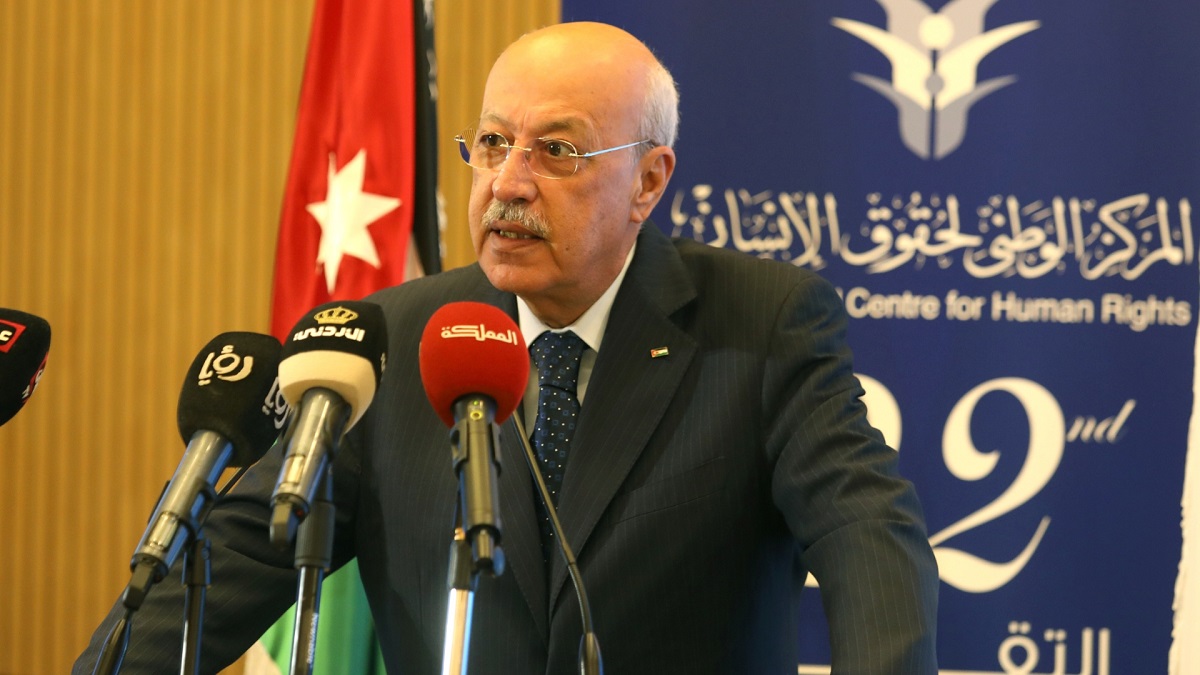
Amman, Sept. 15 (Petra) — The National Center for Human Rights
(NCHR) on Tuesday launched its 22nd annual report on the state of
human rights in Jordan in 2025, documenting key developments,
challenges, and recommendations to strengthen the protection of
rights and freedoms.
The NCHR Board of Trustees Chair Samar Haj Hassan said the report
comes amid continued royal attention to strengthening human rights as
a national priority and a key pillar of comprehensive modernization
and the rule of law.
She described the report as a national document that monitors the
state of human rights based on the Jordanian Constitution, national
legislation, and international human rights standards, drawing on
reviews of legislation and policies, field monitoring, and the
receipt and follow-up of complaints.
Haj Hassan stressed that the value of the center’s recommendations
lies in their impact on legislation, policies, practices, and the
level of protection afforded to rights and freedoms. She said the
center has established a mechanism to follow up on recommendations in
its annual reports in cooperation with relevant authorities, using
timelines and measurable indicators to move from issuing
recommendations to monitoring their implementation and assessing
their impact.
She noted that the report’s launch coincides with the completion of
the center’s 2026-2030 strategic plan, which focuses on promoting
human rights awareness, strengthening protection and monitoring
mechanisms, developing governance and institutional capacities, using
technology, and enhancing partnerships and institutional
communication.
Jamal Shamaila, the center’s Commissioner-General for human rights,
said the report reflects tangible reform developments as well as
remaining challenges, highlighting the need for an evidence-based
approach and for linking public policies to clear indicators for
measurement and evaluation to ensure reforms produce sustainable
results that improve citizens’ daily lives.
He reviewed progress and challenges across key areas, including civil
and political rights, economic, social, and cultural rights,
education and health, the rights of groups most in need of
protection, and individual rights in the digital space.
Shamaila pointed out the report’s indicators underscore the need to
move from fragmented, sector-specific interventions toward integrated
protection and empowerment policies based on clear performance and
measurement indicators and linking legislation, public policy, and
implementation to ensure sustainable and measurable impact.
He stressed that protecting human rights is a shared national
responsibility requiring coordinated efforts by state institutions,
civil society, the private sector, and citizens, as well as continued
dialogue on ways to strengthen the Kingdom’s human rights framework.
As part of efforts to expand outreach and public participation
nationwide, the center said the launch of its 22nd annual report will
also include events in the northern and southern regions, with the
participation of relevant authorities and various segments of local
communities.
The full report is available on the center’s website at
www.ncht.org.jo.
//Petra// AJ