Saudi Arabia’s Voluntary Carbon Market Fuels the Shift to a Low-Carbon

Under UAE President’s directives, UAE launches urgent relief response for Ghana flood victims

Combating Desertification and Drought: Qatar a Model in Preserving Natural Resources, Establishing Environmental Stability

UAE allocates US$30 million for emergency humanitarian response in El Obeid, calls for civilian protection, safe humanitarian aid access in Sudan

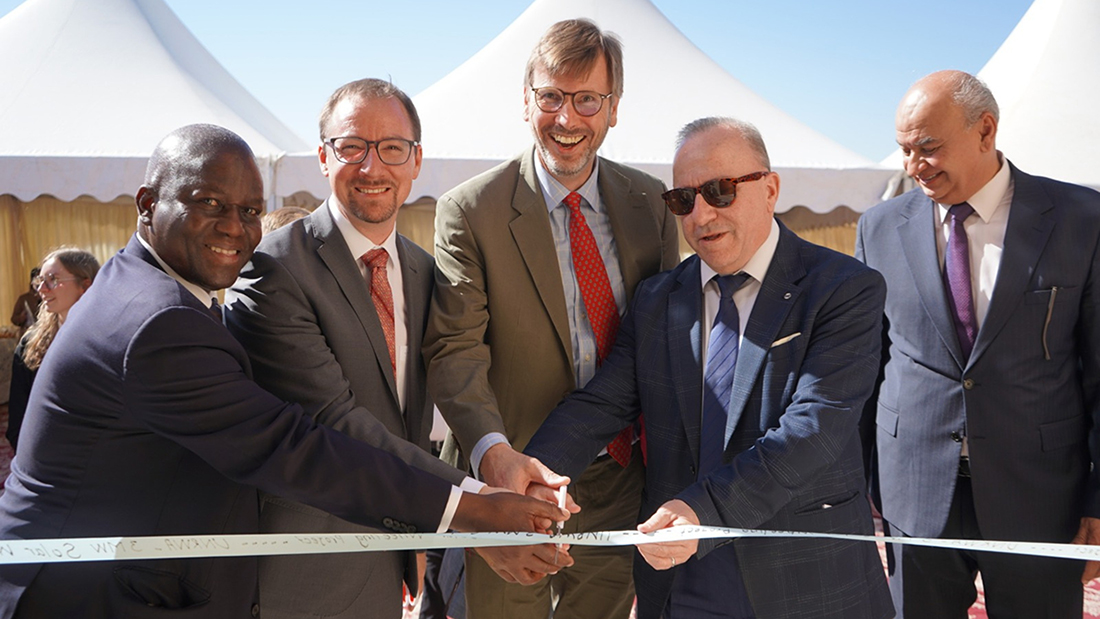
Amman, Sept. 14 (Petra) — A new solar power plant at the Naour
College, run by the United Nations Relief and Works Agency for
Palestine Refugees (UNRWA), is an important addition to the agency’s
efforts to boost energy efficiency and sustain its facilities,
Director-General of the Department of Palestinian Affairs (DPA) Rafiq
Kharfan said on Monday.
Speaking at the plant’s inauguration ceremony, Kharfan said the
project aligns with Jordan’s direction on climate and green
financing, an area His Majesty King Abdullah II has prioritized
through directing the government to strengthen national efforts in
the field.
Renewable energy projects, he said, carry particular weight given the
financial challenges facing UNRWA, explaining that lower energy costs
could free up additional resources for the agency’s core services,
mainly education and vocational training.
Kharfan said the project falls under broader cooperation with the
German Development Bank (KfW), including initiatives carried out
under the REPAC project, which covers infrastructure development,
educational facilities and energy and sustainability projects.
He voiced appreciation for KfW’s support of the project, as well as
the German government’s continued backing of Jordan and UNRWA,
alongside the efforts of the Ministry of Agriculture, the National
Electric Power Company and all parties that contributed to the
project.
Kharfan stressed the importance of sustained support and cooperation
with various partners to strengthen UNRWA’s ability to continue its
role and deliver services to Palestine refugees.
The Naour College solar plant is part of wider efforts to expand the
use of renewable energy sources and improve energy efficiency across
UNRWA facilities, supporting the sustainability of its services and
easing its operational burdens.
//Petra// NQ