Jordan’s Q2 2026 GDP Expands 3.0%, Outperforming Regional Headwinds, International Forecasts

ENV-KUWAIT-SUSTAINABLITYKuwait strengthens environmental sustainability through strategic initiativesBy Zahra Al-Kadhmi

HLT-KUWAIT-SURGERYKuwait advances health sector with robotic, remote surgeryBy Mohammad Al-Moseb

Saudi Arabia’s Voluntary Carbon Market Fuels the Shift to a Low-Carbon

Oral
Literature Lives on in Oman’s Visual Arts: A Modern Reimagining of the Omani
Narrative
Muscat, 20 Jul
2026 (ONA) — Oral literature in the Sultanate of Oman was never merely a
means of storytelling; it was a living memory that preserved the details of
people and place, passing wisdom, emotion and identity from generation to
generation.
As visual arts
evolved, the Omani narrative took on new, deeper forms. The photographic image
began capturing the spirit of popular storytelling; cinema became a vibrant
space for tales, myths and collective memory; and visual art reimagined
heritage symbols in a contemporary language that carries both human and
aesthetic depth.
These creative
fields now affirm the capacity of Omani visual language to serve as a living
extension of oral tradition, while preserving authenticity, identity and
cultural openness.
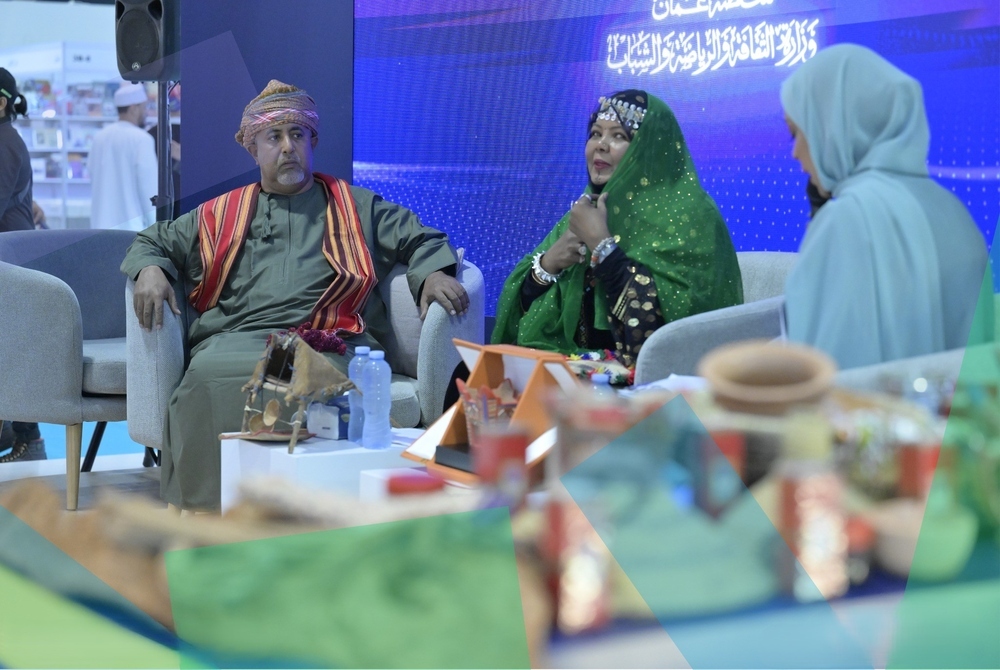
Visual artist
Naila Hamad Al Maamari said Omani visual art has not merely documented heritage
but has re‑produced it as a living cultural material capable of being
reformulated within a contemporary visual discourse. This has been achieved by
transforming heritage symbols and oral memory from descriptive elements into
artistic components that engage with identity and modernity.
She added that
Omani artists draw from tangible and intangible heritage, re‑employing
traditional architecture, natural landscapes, crafts and oral memory in modern
ways. Mud‑brick houses, forts, towers, ornate wooden doors, sea, mountain and
desert have become visual vocabulary symbolising historical continuity and
human connection. Islamic ornaments, dagger‑making, silverwork, weaving,
pottery, calligraphy, folk tales, myths and proverbs have been woven into
abstract and modern compositions. Heritage, she said, is no longer presented as
a closed past but as a dynamic element reinterpreted through the contemporary
artist’s vision.
She also stressed
the balance between cultural identity and global openness. Omani visual art has
drawn on global movements — abstraction, expressionism, surrealism and
conceptual art — while keeping local symbols present. Artists have developed
techniques and materials, including multimedia and digital printing, without
abandoning cultural reference. They have moved from reproduction to
interpretation, re‑reading heritage through a philosophical and aesthetic lens
that reflects contemporary questions. Participation in international
exhibitions and biennials has allowed Omani artists to engage with global
trends while maintaining a distinctive cultural voice, preserving Omani
environmental, heritage and Islamic elements even when using the latest
artistic methods.
Cultural
identity is not a barrier to modernity but a source of creativity, said visual
artist Naila Al Maamari. Omani artists have succeeded in transforming heritage
into a global visual language that transcends cultural boundaries while
retaining its distinct Omani character. Visual art in Oman has thus become a
model of creative interaction between authenticity and contemporaneity, where
popular memory coexists with modern techniques and heritage becomes a space for
aesthetic and intellectual production.
She noted that
Omani visual art has re‑produced heritage symbols and oral memory through
contemporary visions, making heritage a source of creativity rather than mere
documentation. It has balanced Omani cultural identity with openness to global
aesthetics by employing modern methods while preserving local references —
building a visual discourse that combines authenticity and modernity and giving
Omani art a distinguished presence regionally and internationally.
Photographer Zeyad
Khalfan Al Maashari said his goal from the start was for the Omani image to go
beyond visual documentation and become a means of preserving memory, conveying
emotion and narrating the human story before the place. He focused on building
images with narrative value, so that viewers feel they are living their details
and reading inherited stories through them.
He believes
Omani identity is not merely traditional attire or historical landmarks, but a
daily life filled with human details — the wrinkles of a fisherman’s face
weathered by the sea, the hand of a farmer touching a palm trunk, a child
running through ancient alleyways. These small details give the image its soul
and preserve a time that may change but is held for future generations.
Al Maashari
employs light, shadow, composition and colour in service of the story, not just
visual beauty. Soft lighting evokes calmness and nostalgia, shadows reflect the
depth of human experience, and composition guides the viewer’s eye toward the
most expressive element. Choosing the right moment is essential; an authentic
moment carries emotions that dozens of artificial shots may fail to convey.
He highlighted
the relationship between people and their environment — sea, mountains, desert
and agricultural oases — as a key aspect of the image. The environment is not a
backdrop but a partner in shaping identity and story, integrated into the frame
as part of the visual narrative.
He explained that an image succeeds in
telling a story when it sparks the viewer’s curiosity, prompting questions: Who
is this person? What is the story behind this moment? The image then becomes
like an open page of a novel, completed by the viewer’s imagination and
emotions. When the viewer senses the scent of the place and hears in their
imagination the sound of the sea, the rustle of palm fronds or footsteps in
ancient alleyways, the image has transcended vision to become a complete
sensory and human experience.
A successful
photograph is not merely one that conveys a scene as it is, but one that
preserves the memory of society, documents its values, and gives the Omani
people a lasting visual presence that remains alive in the heart and mind, said
photographer Zeyad Khalfan Al Maashari.
Filmmaker
Abdullah Mohammed Al Maliki said Omani cinema has begun to transform folk tales
from spoken narrative into a visual experience, though the process is still in
its early stages. Omani cinema, still relatively young, has yet to produce a
large body of work that fully reflects its oral heritage. Yet it has made
important attempts that put place, memory and humanity at the heart of visual
storytelling.
In films such
as “Al Boom” by Khalid Al Zedjali, the sea appears not as a beautiful
backdrop but as memory tied to livelihood, waiting and social change. Some
works have approached Bedouin, mountain and coastal environments, presenting
dialects, clothing and customs as part of character and identity. A glance,
silence, the movement of a boat, the sound of wind or sea become storytelling
tools as significant as words, he said.
The value of
cinema, Al Maliki added, lies in re‑presenting heritage in a language
understood by new generations and global audiences. Folk proverbs, myths and
tales should not be relics but human meanings — fear, loss, courage, connection
to land — that make Omani identity accessible without losing its
distinctiveness.
The challenge,
he said, is ensuring identity does not become mere decoration. Depth comes when
the story is rooted in local memory and the image serves meaning, not just
embellishment. Omani cinema has taken an important step but needs more courage,
production and engagement with tales as living material.
Storyteller
Thamna Houbais Al Jandal said the folk tale does not age; it renews itself,
adapting to each era. It was told under moonlight, in gatherings, on radio, and
today through image, cinema, painting and digital platforms. Whatever the
medium, the human being remains its first and last purpose.
The Omani
storyteller, she said, was never merely a narrator but a guardian of popular
memory, carrying history, morals and the scent of frankincense, sea and
mountain. The tale preserved what books could not, planting values with
simplicity.
Thamna sees
visual language not as a rival to the tale but as its natural extension. A
short film may condense an idea that requires pages; a single image may convey
emotions words cannot describe. The success of visual work lies not in beauty
alone but in truth.
She explained
that when Omani artists draw on heritage, dialect, clothing and environment,
they are not presenting beautiful scenes but creating a living memory, giving
heritage wings to carry it to new generations.
Today’s
generations live in a world of images, she said. It is wise to address them in
their own language, but not at the cost of losing spirit and identity. The goal
is not to change the tale but to present it with contemporary creativity. If
its core values — tolerance, generosity, courage and belonging — are preserved,
the tale will remain alive, not only in memory but in hearts.
She concluded
that Omani visual language should not merely display heritage as a beautiful
past but present it with renewed spirit — seen in films, experienced in
photographs and contemplated in paintings.
—
Ends/Khalid