ENV-KUWAIT-SUSTAINABLITYKuwait strengthens environmental sustainability through strategic initiativesBy Zahra Al-Kadhmi
HLT-KUWAIT-SURGERYKuwait advances health sector with robotic, remote surgeryBy Mohammad Al-Moseb

Saudi Arabia’s Voluntary Carbon Market Fuels the Shift to a Low-Carbon

Under UAE President’s directives, UAE launches urgent relief response for Ghana flood victims

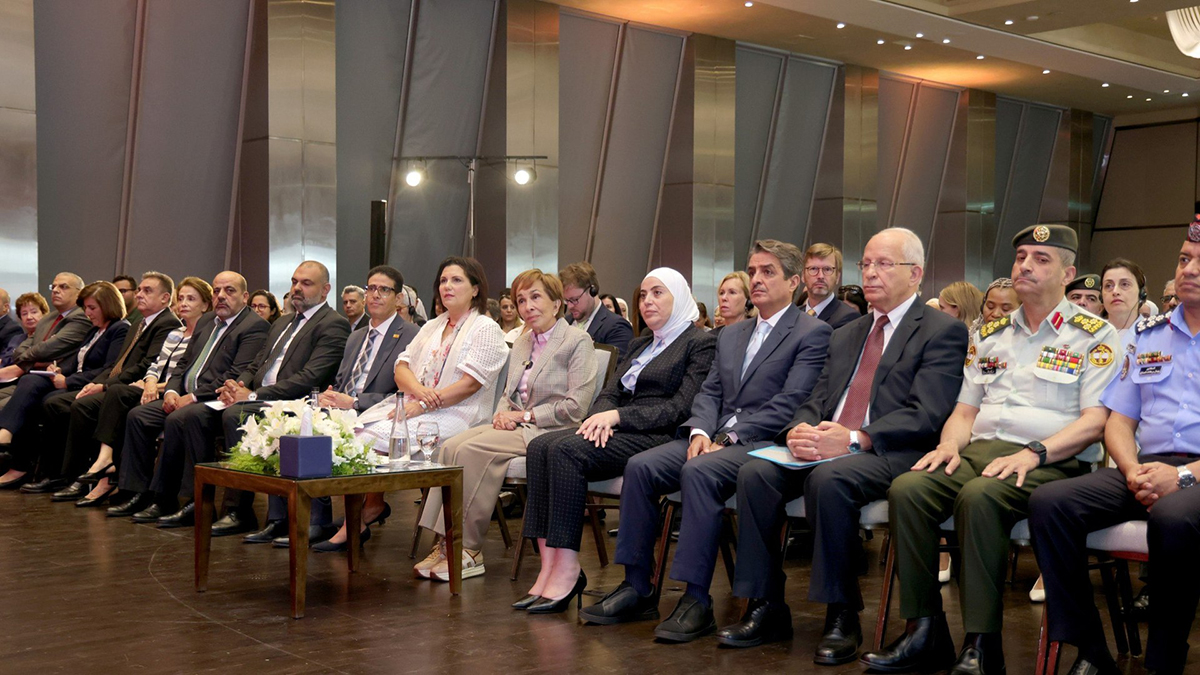
Amman, July 27 (Petra) – HRH Princess Basma bint Talal, United
Nations Population Fund (UNFPA) Goodwill Ambassador, on Monday
stressed the importance of Jordan’s partnership with the UNFPA as the
two marked 50 years of cooperation.
Addressing an event co-hosted with the Higher Population Council
(HPC), Princess Basma underscored UNFPA’s role in expanding access to
essential services and improving lives across Jordan.
She also called on the international community to urgently
reprioritize reproductive healthcare and protection for women and
girls in conflict zones, as well as the global displacement crisis.
Following is a transcript of Princess Basma’s address:
“Since I embarked on my role as a Goodwill Ambassador for the United
Nations Population Fund (UNFPA) in 2001, it has been a great
privilege to witness, first-hand, the remarkable resilience of people
in the face of the most difficult circumstances. Today, my commitment
to this mission remains as deep and steadfast as it was when I first
undertook this role.
On the occasion of World Population Day, I extend my appreciation and
gratitude to the women and men of UNFPA around the world for their
tireless efforts to protect health, dignity, and human rights. Here
in Jordan, we proudly mark this year the fiftieth anniversary of our
partnership with UNFPA a partnership whose direct impact we have
witnessed in saving lives and expanding access to essential services
for those who need them most.
Globally, through its vital network of clinics and services, UNFPA
continues to provide reproductive health care and protection to
thousands of women, adolescent girls, and refugees year after year,
often under extremely difficult and complex circumstances.
As we commemorate World Population Day 2026, I would like to focus on
two crises that continue to weigh heavily on our region and threaten
the fundamental rights of women and girls.
The first is the impact of conflict on reproductive health services.
Above all else, conflict is a public health emergency. In areas of
intense conflict, with Gaza standing as a disastrous example, the
health system has been devastated.
There, childbirth is no longer a symbol of new life but has become a
source of fear and anxiety. We have witnessed women being forced to
undergo emergency caesarean sections without anaesthesia, while
newborn babies struggle to survive in overcrowded shelters lacking
clean water and essential medical supplies.
Under these conditions, the maternal mortality ratio has risen
dramatically to approximately 948 deaths per 100,000 pregnancies,
compared with a baseline of around 30 deaths per 100,000 under stable
conditions.
Alongside this severe physical burden, women continue to endure
devastating psychological trauma, including acute post-traumatic
stress disorder, anxiety, and the constant fear for their lives,
dignity, and future.
The second crisis is the impact of forced displacement. Today, the
world is facing an unprecedented humanitarian crisis, with more than
117 million people forcibly displaced, nearly half of whom are women
and girls. In our Middle East region alone, more than 1.6 million
pregnant women have been displaced as a result of conflict.
Worldwide, 60 million displaced women and girls face heightened risks
of gender-based violence, often finding themselves in environments
where protection systems have collapsed or are no longer capable of
responding to the scale of need and suffering.
To provide life-saving reproductive health care for nearly 34 million
women, girls, and young people this year, UNFPA is seeking US$1
billion through its 2026 Humanitarian Appeal.
Yet this humanitarian appeal comes at a time when global priorities
remain profoundly misaligned. Last year alone, the world spent a
record US$2.89 trillion on military expenditure. This starkly
illustrates a reality in which the instruments of destruction receive
funding at a level more than 57 times greater than what is currently
allocated to meeting essential reproductive health needs.
When we consider that an estimated 239 million people will require
humanitarian assistance in 2026 as a result of conflict, climate
shocks, and disease outbreaks, a humanitarian appeal of US$1 billion
important though it is remains modest compared with the scale of the
need. The challenge is not one of capacity; it is one of courage and
moral responsibility.
Let World Population Day serve as a genuine catalyst for reordering
our priorities, so that reproductive health and the safety of women
and girls become serious priorities that can neither be postponed nor
overlooked.
Achieving this goal is not a luxury. It is a commitment to a
fundamental human right.”
UNFPA Representative in Jordan Himyar Abdulmoghni, for his part,
commended the 50-year partnership, noting its evolution to address
Amman’s changing priorities, advance gender equality, and empower
youth through evidence-based policymaking.
Laila Baker, UNFPA Regional Director for Arab States, presented key
findings from the “Life, Choices, and Future” survey of over 108,000
young adults across 73 countries. In Jordan, nearly half of
respondents (47.6%) cited deep concerns over regional instability,
economic uncertainty, and environmental risks. Baker stressed that
demographic policy “must look beyond” population growth to focus on
jobs, housing, healthcare, and equal opportunity.
Omar Al-Fanek, Ministry of Planning and International Cooperation
Secretary-General, and Issa Masarweh, HPC Secretary-General, pledged
to addressing demographic shifts, youth unemployment, and economic
pressures through rights-based national initiatives.
//Petra// HA