ENV-KUWAIT-SUSTAINABLITYKuwait strengthens environmental sustainability through strategic initiativesBy Zahra Al-Kadhmi

HLT-KUWAIT-SURGERYKuwait advances health sector with robotic, remote surgeryBy Mohammad Al-Moseb

Saudi Arabia’s Voluntary Carbon Market Fuels the Shift to a Low-Carbon

Under UAE President’s directives, UAE launches urgent relief response for Ghana flood victims
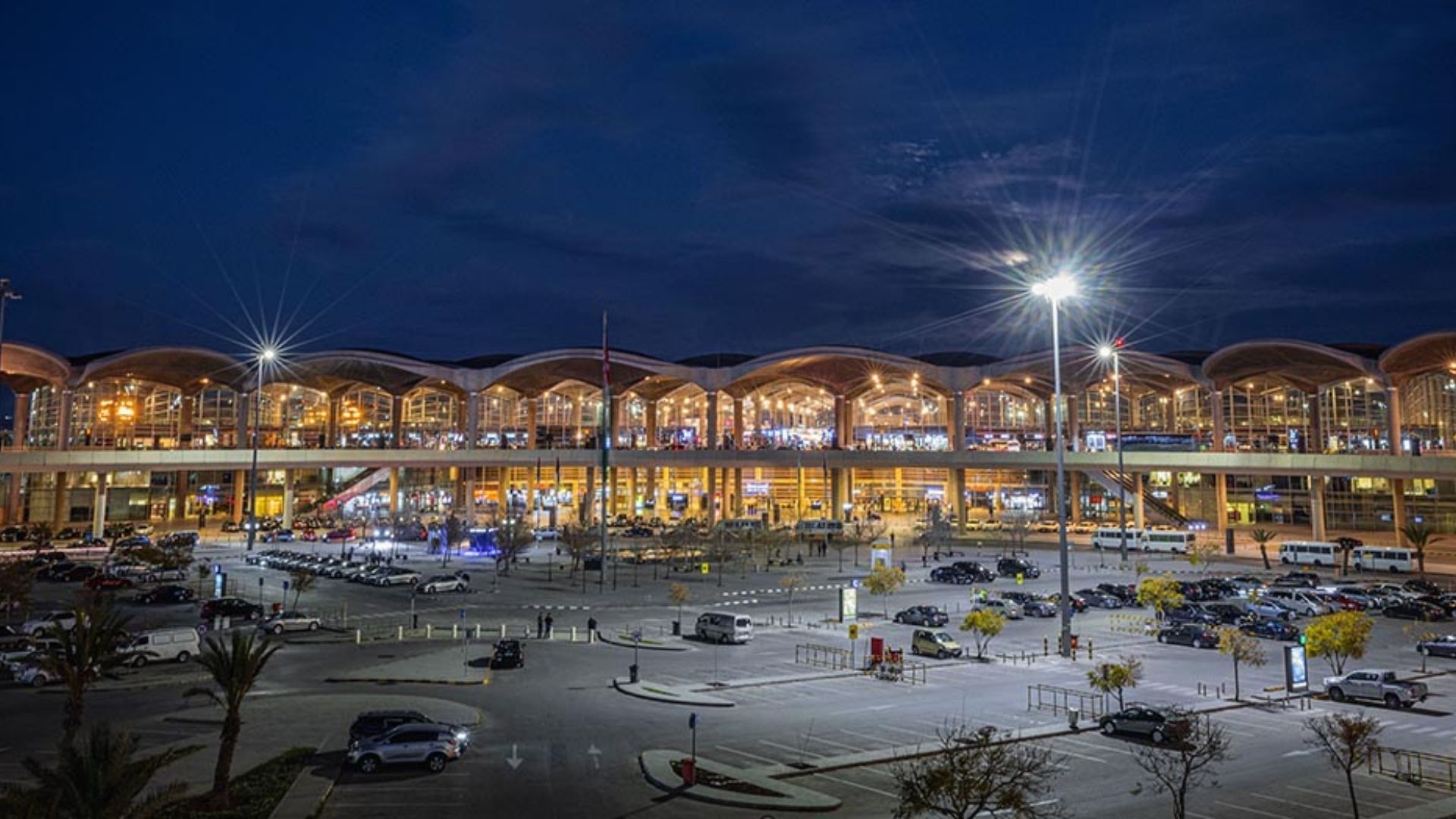
Amman, July 6 (Petra) – Airport International Group (AIG), the
Jordanian company operating Queen Alia International Airport (QAIA),
announced its key corporate social responsibility and sustainability
achievements during 2025 and the first half of 2026.
The group said the period delivered measurable progress in
environmental performance, community empowerment and corporate
governance, reflecting the growing role of sustainability in
supporting operational resilience and long-term value at Jordan’s
main air gateway.
In 2025, QAIA maintained its position as the first airport in the
Middle East and North Africa, and the only airport in the region, to
hold Level 4+ certification under the Airport Carbon Accreditation
program of Airports Council International Asia-Pacific & Middle East,
which the group said is the program’s highest level. The
certification was renewed during the year.
AIG reduced carbon emissions from fuel and electricity consumption by
11 percent, bringing cumulative reductions since 2012 to more than 50
percent, from 32,643 tons of carbon dioxide equivalent to 12,130
tons.
The group also expanded electric mobility projects and developed the
airport’s solar power plant to improve energy efficiency. Its
environmental efforts included recycling 70.15 tons of waste, reusing
88 percent of water, and planting 20,000 trees.
AIG said the progress was supported by the publication of its
environmental, social and governance (ESG) report, prepared in
accordance with Global Reporting Initiative (GRI) standards, covering
its environmental, social and governance performance in 2025.
On the social front, the Airport International Group Foundation
graduated the sixth cohort of 72 trainees from its Hirfati Training
Center, which serves youth from Al-Jizah and nearby areas by
equipping them with vocational and practical skills aligned with
labor market needs.
The foundation also launched the seventh cohort after signing a
partnership agreement with Pioneers Academy. Since its establishment
in 2019, Hirfati has benefited about 694 participants.
As part of its accountability approach, the foundation prepared an
independent impact assessment report for 2023-2025 to guide community
programs and measure their effectiveness.
The foundation also received the Sustainability Innovation Award, was
recognized in the 2025 Corporate Social Responsibility Initiatives
category, and maintained an advanced AAA ESG rating, with a score of
93 out of 100.
Internally, more than 80 percent of employees participated in CSR
initiatives serving the community and environment.
Women represented 17 percent of the total workforce and 38 percent of
new hires through mid-2026. AIG said women hold 24 percent of
administrative, operational, engineering and support roles and 18
percent of board membership, supported by programs aimed at expanding
women’s participation and leadership.
In 2025, the group joined UN Women to align its policies and
practices with international gender equality standards and strengthen
an inclusive workplace.
At the institutional level, QAIA became the first airport in the
region to obtain ISO 50001 certification for energy management. It
also retained four other ISO certifications covering quality
management, environmental management, occupational health and safety,
and customer complaint management.
In the first quarter of 2026, QAIA achieved a 4.98 score in the
Airport Service Quality ranking, placing fourth among four-star
airports in the Middle East.
AIG also strengthened its national economic impact by relying on
local suppliers, who accounted for 81 percent of its total supplier
base.
AIG CEO Nicolas Deviller said sustainability is an integrated
management approach, not merely an institutional obligation. He said
the progress achieved in 2025 and early 2026 reflects years of work
to integrate environmental responsibility, ethical governance and
social responsibility into QAIA’s operations.
He added that the approach strengthens operational resilience,
enhances passenger confidence and reinforces QAIA’s position as a
regional model for sustainable airport management.
Airport International Group Foundation Chairman Omar Masri said the
foundation’s commitment extends beyond training programs to
empowering youth through Hirfati by providing practical skills that
improve employment prospects, support entrepreneurship and contribute
to sustainable income.
He said evidence-based CSR programs can provide scalable solutions
that empower communities and support the national economy.
//Petra// AO