
Saudi Arabia’s Voluntary Carbon Market Fuels the Shift to a Low-Carbon

Under UAE President’s directives, UAE launches urgent relief response for Ghana flood victims

Combating Desertification and Drought: Qatar a Model in Preserving Natural Resources, Establishing Environmental Stability
UAE allocates US$30 million for emergency humanitarian response in El Obeid, calls for civilian protection, safe humanitarian aid access in Sudan

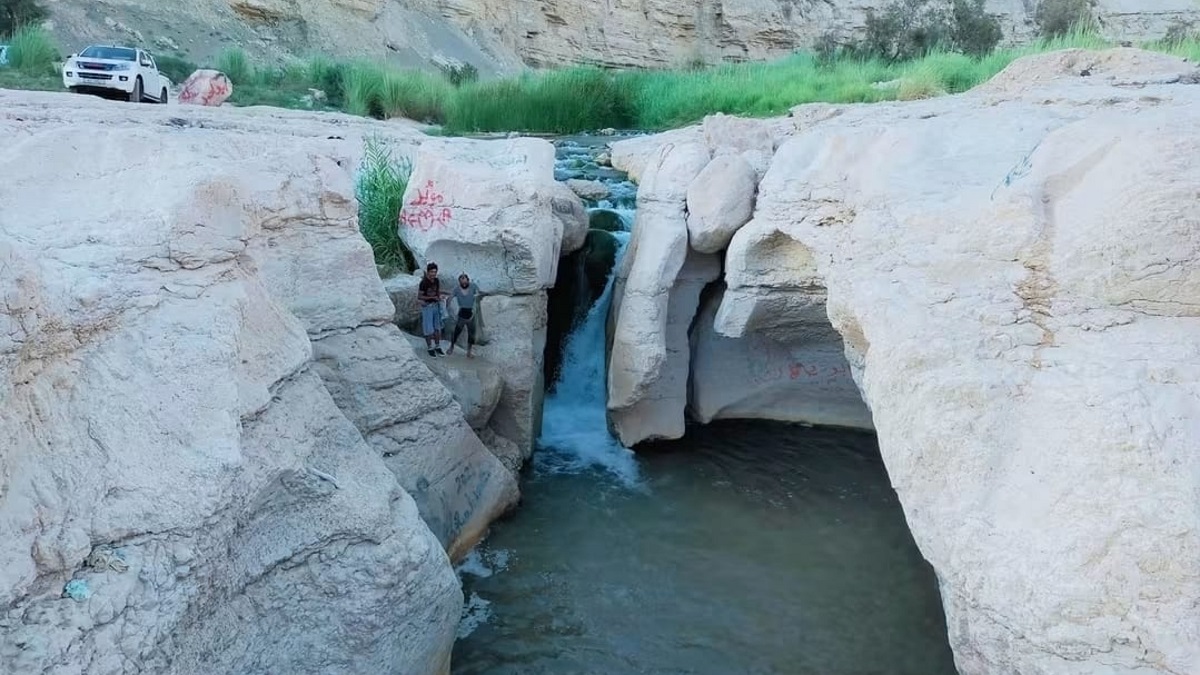
TAFILAH, Sept. 12 (Petra) – Cradled by sheer rose-red cliffs and
rugged mountain peaks, the cascading waters of the Majhoud Waterfalls
weave through a dramatic canyon before winding toward Wadi Al-Hesa
and the southern Jordan Valley.
Framed by wild oleander, sidr trees, and native palms, this hidden
aquatic haven offers a striking visual tableau that remains largely
overlooked on Jordan’s mainstream tourism map.
Located roughly 35 kilometers northwest of Tafilah near the village
of West Arhab, the waterfalls form an essential ecological link along
the watercourse of Wadi Al-Hesa–connecting downstream to the renowned
mineral springs of Afra and Burbeita in a journey stretching across
dozens of kilometers.
Upon arrival, the landscape transforms as the roar of cascading water
drowns out the outside world. Natural pools form beneath the falls,
where the deep pink and limestone rock faces mirror off the crystal
surface, creating an ideal setting for adventure tourism,
photography, hiking, swimming, and exploration.
Tourism trail expert Captain Aws Al-Marayat emphasizes that Majhoud
Waterfalls represent one of the most vital natural segments of the
Wadi Al-Hesa trail due to their distinct topography, water flow, and
geological formations. He asserts that the site could easily be
transformed into an integrated tourism product if the trail is
organized and rehabilitated in accordance with eco-adventure
standards.
Al-Marayat highlights the necessity of mapping clear hiking trails,
classifying swimming zones by safety levels, installing directional
and warning signage, and establishing rescue and monitoring stations.
He also stresses the importance of training local youth from nearby
villages as professional adventure guides who possess intimate
knowledge of the terrain’s hidden pathways and hazards. Involving the
local community in trail management, guiding, hospitality, and local
agriculture can turn tourism into a powerful driver of grassroots
economic development, he added.
Researcher and historian Ishaq Ayal Salman notes that the value of
Majhoud Waterfalls extends beyond natural aesthetics to encompass the
broader historical and geographical landscape of Wadi Al-Hesa, which
has served as a historic crossroads for human migration and
settlement over millennia. Integrating the waterfalls with
surrounding archaeological sites into a unified trail spanning from
Afra and Burbeita through Wadi Al-Hesa would offer visitors a richer,
multi-dimensional experience blending nature, adventure, and history.
Visitors and outdoor enthusiasts agree that the site’s raw beauty far
exceeds its current fame, noting that many Jordanians remain unaware
of the destination despite its improved accessibility compared to
past years. Flowing waters, natural rock pools, and rich vegetation
lend the site a unique character, drawing hikers, swimmers, and
adventure-seekers during spring, summer, and weekends.
At the same time, visitors are calling for the site to be officially
placed on Jordan’s tourism promotion map, equipped with basic
amenities such as safe seating areas, shaded structures, restrooms,
and emergency rescue points, while rigorously preserving the area’s
pristine natural integrity.
Beyond tourism, cooperative leaders in Ayma, Arhab, and Dab’a
(villages belonging to the Thuwabiya area) suggest that the abundant
water flow could serve as an additional resource for agricultural
development if managed through sound technical and environmental
studies. They propose establishing cooperatives to harness a portion
of the water for cultivating guavas, citrus, and vegetables, thereby
creating jobs for youth and connecting local agricultural produce
directly with visiting eco-tourists and campsites.
Tourism specialists argue that Majhoud should be developed as a
structured destination rather than a casual stopover. Solutions
include building a small visitor center, rest stations, an eco-camp
or boutique chalets, sanitation facilities, rescue posts, and
tailored infrastructure solutions for power, water, and
communications.
While the Ministry of Public Works and Housing completed the access
road to Majhoud two years ago–greatly easing transit–regular
maintenance remains imperative given the rugged terrain and winter
flash flood risks.
The Tafilah Directorate of Tourism affirms that Majhoud Waterfalls
possess all the necessary attributes for eco-adventure and leisure
tourism, noting that incorporating the site into future tourism
development plans will amplify its visibility, particularly through
integration with neighboring regional trails.
Amid the rush of water and the silence of the mountains, local
residents view Majhoud as a sleeping giant of Jordanian tourism. With
the water flowing, nature waiting, and history watching, the call for
strategic planning, targeted investment, and sustainable
infrastructure remains the key to unlocking the destination’s full
potential for visitors and local communities alike.
//Petra// AA