Saudi Arabia’s Voluntary Carbon Market Fuels the Shift to a Low-Carbon

Under UAE President’s directives, UAE launches urgent relief response for Ghana flood victims
Combating Desertification and Drought: Qatar a Model in Preserving Natural Resources, Establishing Environmental Stability
UAE allocates US$30 million for emergency humanitarian response in El Obeid, calls for civilian protection, safe humanitarian aid access in Sudan

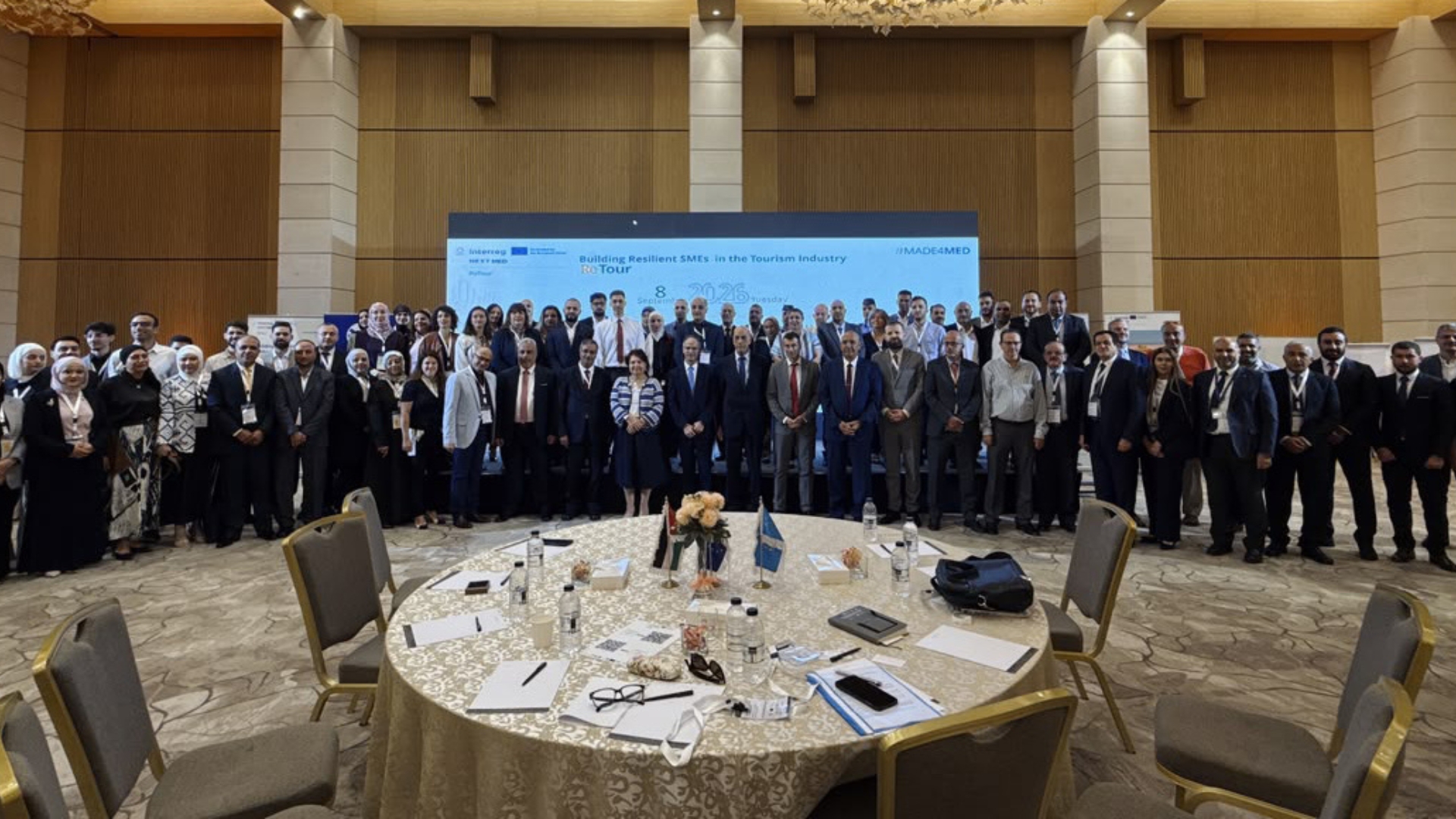
Amman, Sept. 8 (Petra) — The Tourism Innovation and Resilience Forum
on Tuesday recommended further developing the digital “ReTour”
platform to reflect feedback from the tourism sector and meet the
needs of small and medium-sized enterprises (SMEs), while
strengthening national and regional cooperation to build a more
resilient and innovative tourism sector.
Held in Amman under the patronage of Sharifa Nofa bint Nasser, the
forum was organized by Jordan University of Science and Technology
(JUST) and Specto for Computer Leadership as part of the “Enhancing
the Resilience of Small and Medium Tourism Enterprises (ReTour)”
project, funded by the European Union through the Interreg NEXT MED
cross-border cooperation program for the Mediterranean.
The forum brought together decision-makers, experts, tourism-sector
representatives, SMEs, universities, innovation institutions and
project partners from Mediterranean countries to discuss ways to help
the tourism sector anticipate risks, adapt to crises and benefit from
artificial intelligence (AI) and digital transformation.
Participants recommended incorporating tourism-sector feedback into
the final version of the ReTour platform, identifying priorities for
the project’s next phase and ensuring that its digital tools and
services effectively respond to SME needs. They also called for
stronger cooperation among tourism stakeholders at the national and
regional levels to translate research and innovation into practical
solutions that support economic growth and strengthen SMEs’ ability
to adapt and compete.
The opening session featured remarks by ReTour Project Coordinator at
JUST Mostafa Ali, Specto founder Ahmad Abu-El-Haija, Interreg NEXT
MED Eastern Mediterranean Branch Office Coordinator Esmat Kardsheh,
JUST Vice President Ahmad Al-Ajlouni, speaking on behalf of JUST
President Khaled Al-Salem, EU Ambassador to Jordan Pierre-Christophe
Chatzisavas, and the forum’s patron.
Abu-El-Haija highlighted the importance of cooperation between
academia and the private sector in transforming knowledge into
economic and social value, drawing on his company’s more than two
decades of experience in developing digital skills in Jordan and the
region.
The forum examined recent developments in AI, digital innovation and
early-warning systems for businesses. Morten Møller,
Secretary-General of the European Early Warning Network in Denmark,
discussed the role of early-warning mechanisms in identifying signs
of business distress before they develop into crises.
Sami Abu-El-Haija, founder and CEO of an AI company in San Francisco,
addressed the role of technology in developing smart tourism
ecosystems.
The forum also featured a demonstration of the AI-powered ReTour
platform, which is being developed to provide tourism SMEs with
digital tools and solutions designed to strengthen their resilience
and competitiveness.
A validation workshop adopted a participatory approach through four
roundtables examining platform usability, AI capabilities, SME needs,
data sharing, governance and sustainability.
A dialogue session titled “Building a More Resilient and Innovative
Tourism Ecosystem,” moderated by Suleiman Al-Farajat of the
University of Jordan, brought together representatives of the Jordan
Tourism Board, Cyprus Sustainable Tourism Initiative, Amman Chamber
of Commerce, Jordan Hotels Association, Sector Skills Council and
Jordan Society of Tourism and Travel Agents.
The forum concluded that tourism resilience extends beyond recovering
from crises to include the ability to anticipate change, prepare for
risks, adapt to emerging challenges and use innovation and technology
to sustain growth.
//Petra// NQ