
ENV-KUWAIT-SUSTAINABLITYKuwait strengthens environmental sustainability through strategic initiativesBy Zahra Al-Kadhmi

HLT-KUWAIT-SURGERYKuwait advances health sector with robotic, remote surgeryBy Mohammad Al-Moseb

Saudi Arabia’s Voluntary Carbon Market Fuels the Shift to a Low-Carbon

Under UAE President’s directives, UAE launches urgent relief response for Ghana flood victims

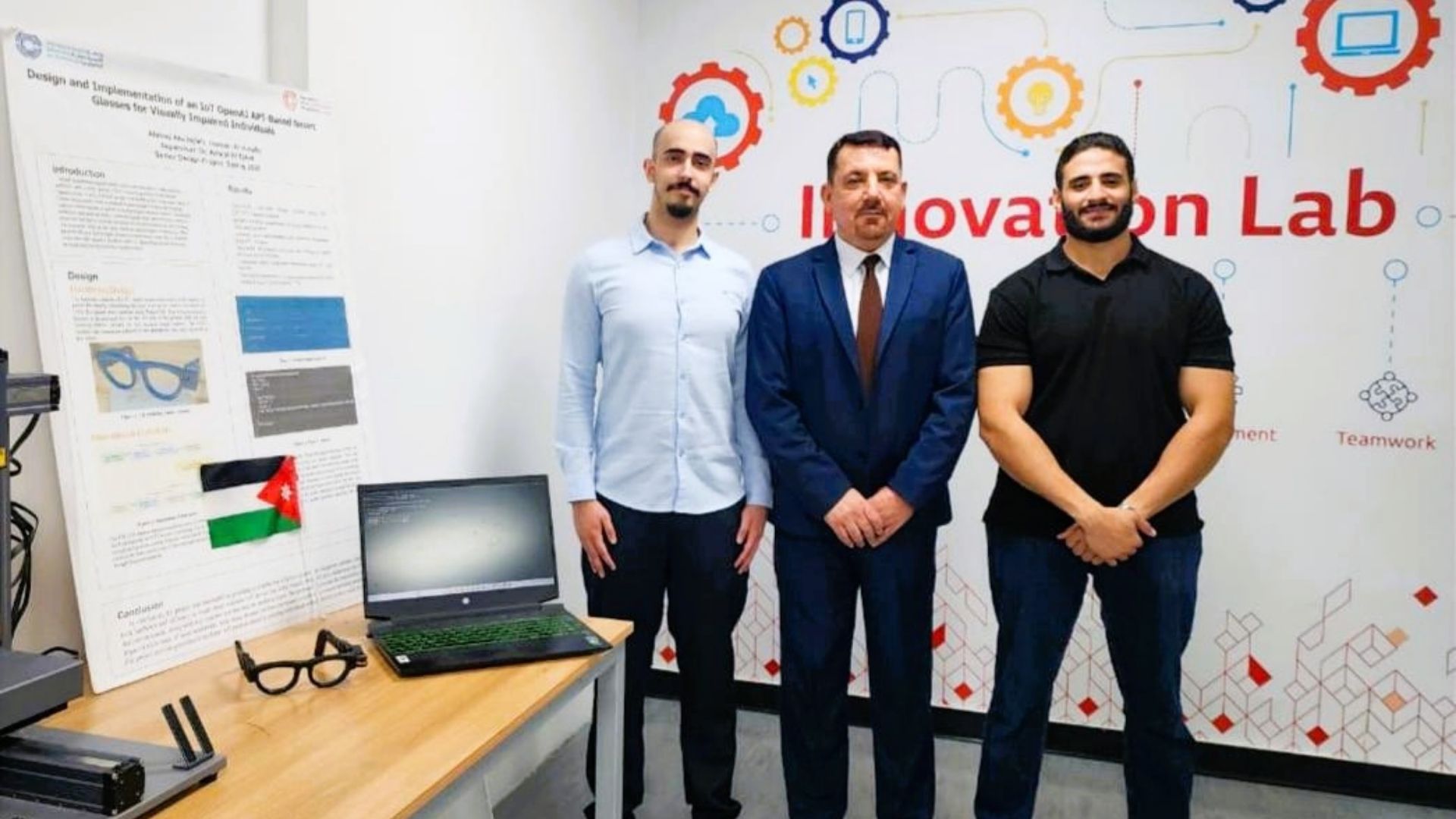
Amman, June 30 (Petra) — An engineering team from the Department of
Communications Engineering and the Internet of Things at Princess
Sumaya University for Technology (PSUT) has developed a prototype of
AI-powered smart glasses designed to help blind and visually impaired
people better understand their surroundings and navigate
independently.
The prototype combines wireless communications and generative
artificial intelligence to enable users to read signs and
instructions, identify objects, and move more safely. The system was
developed under the supervision of Ashraf Tahat with engineers
Hussein Al-Hraibi and Ahmad Asim participating in the project.
Tahat said the wearable component of the system was designed and
manufactured using 3D printing technology. It periodically captures
images of the user’s surroundings and wirelessly transmits them to a
dedicated smartphone application.
The application instantly sends the images via cellular networks to a
cloud computing platform, where they are processed and analyzed using
optical character recognition (OCR), contextual scene analysis and
generative AI algorithms to identify objects, recognize text and
interpret the user’s environment.
The processed information is then converted into audio output
delivered through Bluetooth headphones, enabling users to receive
natural-language descriptions of nearby scenes, obstacles and written
text, helping them interact with their surroundings with greater
confidence while providing practical situational awareness.
Tahat said the project responds to a growing global need, noting that
according to the World Health Organization, more than 2.2 billion
people worldwide live with visual impairment, including about 43
million who are blind.
He added that international eye care organizations project the number
could increase by as much as 55 percent by 2050 because of population
aging and changing lifestyles.
He said integrating computer vision technologies with large language
models opens the way for a new generation of wearable assistive
technologies that go beyond conventional systems limited to obstacle
alerts or distance measurement.
//Petra// NQ