Saudi Arabia’s Voluntary Carbon Market Fuels the Shift to a Low-Carbon

Under UAE President’s directives, UAE launches urgent relief response for Ghana flood victims

Combating Desertification and Drought: Qatar a Model in Preserving Natural Resources, Establishing Environmental Stability

UAE allocates US$30 million for emergency humanitarian response in El Obeid, calls for civilian protection, safe humanitarian aid access in Sudan

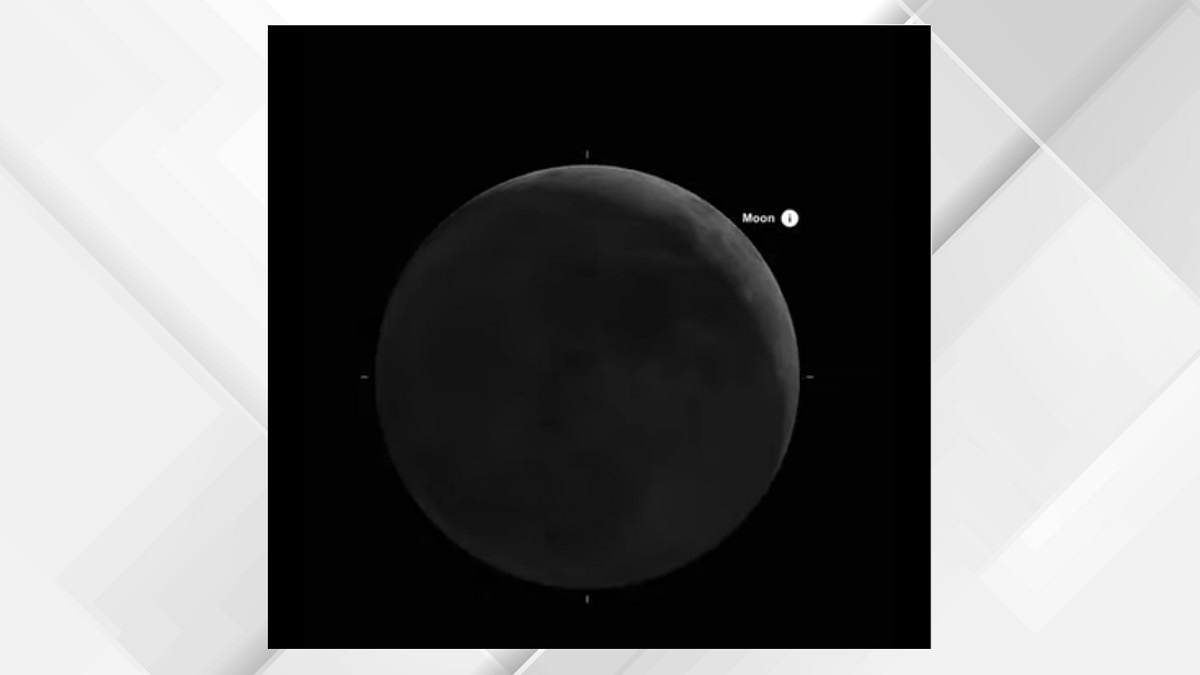
Amman, Sept. 13 (Petra) — Venus will vanish behind the Moon in the
middle of the day on Monday, disappearing from view for about 84
minutes in an astronomical event visible from the Kingdom with the
aid of optical equipment.
The event, known as a lunar occultation, will occur as the Moon
passes directly between Earth and Venus, briefly concealing one of
the brightest objects in the sky behind its disk.
Jordanian Astronomical Society President Ammar Sakaji said the event
will begin over Amman and surrounding areas at 12:47 p.m., with Venus
becoming fully hidden by 12:49 p.m.
The planet will remain concealed until 2:13 p.m., when it begins to
emerge from behind the Moon, and will be fully visible again by 2:15
p.m.
Daylight will make the phenomenon difficult to see with the naked
eye, but telescopes, binoculars and astronomical cameras can be used
under clear skies, Sakaji said. The society plans to track and
document the event and share its observations with the public.
The spectacle will not end with Venus reappearing. As daylight fades,
the Moon and Venus will remain close together in the western sky and
become considerably easier to spot with the naked eye.
Shortly before setting, the two will be separated by about two
degrees and 20 arcminutes and will drop below the horizon within
roughly five minutes of each other, offering observers across the
Kingdom another opportunity to see the pairing if skies remain clear
and the western horizon is unobstructed.
The occultation also has scientific value beyond the visual event.
Recording the precise moments at which an object disappears and
reappears behind the Moon can help astronomers examine features along
the lunar edge and test observed timings against astronomical
calculations.
The Jordanian Astronomical Society cautioned anyone attempting to
observe the daytime event not to point telescopes or binoculars at or
near the Sun. Looking at the Sun through optical equipment without a
specialized solar filter can cause severe and permanent eye damage.
//Petra// RZ