Saudi Arabia’s Voluntary Carbon Market Fuels the Shift to a Low-Carbon

Under UAE President’s directives, UAE launches urgent relief response for Ghana flood victims
Combating Desertification and Drought: Qatar a Model in Preserving Natural Resources, Establishing Environmental Stability
UAE allocates US$30 million for emergency humanitarian response in El Obeid, calls for civilian protection, safe humanitarian aid access in Sudan

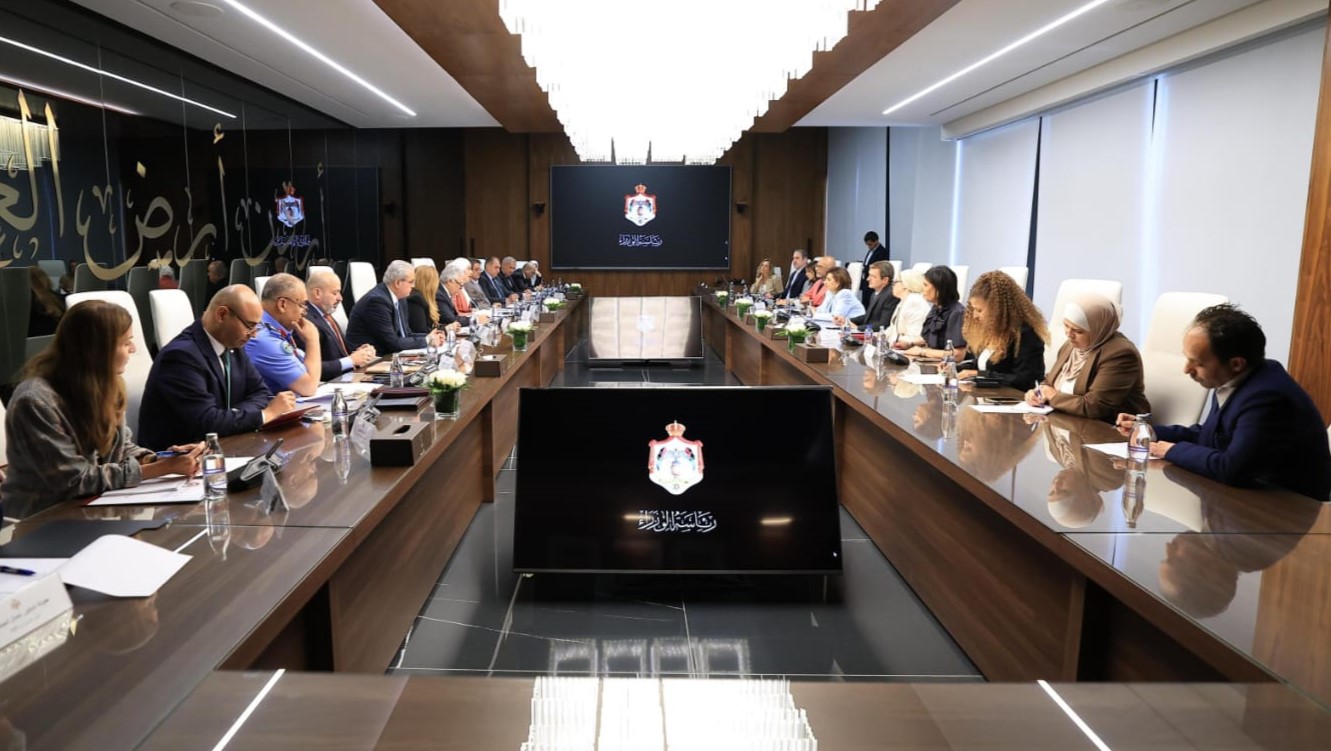
Amman, Sept. 1 (Petra) – The Inter-Ministerial Committee for Women’s
Empowerment met on Tuesday with UN Under-Secretary-General and
Executive Director of UN Women Sima Bahous to discuss venues of
cooperation on a number of joint programmes aimed at supporting and
empowering women.
Committee Chair Minister of Social Development Wafaa Bani Mustafa
said that Jordan has made significant progress in legislation and
policies aimed at empowering women, advancing their rights, and
strengthening their economic, political, and social participation.
She noted that this progress showcases Jordan’s commitment to
advancing women’s empowerment and enhancing their participation
across public life. She stressed that women’s empowerment is a shared
national responsibility that will contribute to achieving inclusive
development and sustainable economic growth.
Bani Mustafa pointed to major achievements in legislation supporting
women’s participation, the development of national policies and
strategies, and a number of the committee’s initiatives to strengthen
women’s representation in decision-making positions, increase their
economic participation, and translate these efforts into tangible
results.
She noted that the committee recently launched the “Institutional
Seal for Supporting and Empowering Women in the Public and Private
Sectors” in cooperation with the King Abdullah II Center for
Excellence and the Jordanian National Commission for Women.
Designed to boost women’s economic role under the Economic
Modernisation Vision (EMV), the initiative establishes clear
workplace equality standards, helping local private firms create fair
environments and compete globally.
Bani Mustafa expressed appreciation for the role played by UN Women
in supporting Jordan’s efforts to empower women and enhance their
participation, in line with the priorities of the Engendered Strategy
in the EMV and the National Strategy for Women. She called for
expanding cooperation and partnership to support Jordan’s development
priorities.
Bahous, for her part, lauded the close partnership between Jordan and
UN Women, stressing that the priority in the next phase is to build
on the important gains achieved in legislation and policies and
translate them into tangible improvements in the lives of women and
girls across the Kingdom.
Bahous said that this progress reflects Jordan’s commitment to
placing women’s participation at the heart of its modernisation
agenda and its recognition that women’s empowerment is fundamental to
achieving development and prosperity in the Kingdom.
She stated that women are essential partners in Jordan’s national
development journey, bringing expertise, skills and capabilities that
contribute to driving innovation, enhancing productivity and
achieving inclusive growth.
Bahous announced that Jordan has been selected as one of three
priority countries for the new phase of UN Women’s global “Women
Count” programme. She explained that the programme will support the
implementation of the EMV by strengthening the production,
accessibility, and use of data and statistics on women, thereby
enabling a more accurate measurement of women’s contribution to the
economy.
She stated UN Women’s interest in hosting the global launch of the
new phase of the programme in Jordan later in 2026.
During the meeting, participants discussed achievements and
opportunities for cooperation to bolster women’s roles and
empowerment across a range of sectors, including decent work,
transport, health, education, diplomacy, conflict prevention and
resolution, youth and sports, artificial intelligence (AI), the
environment and the Women, Peace and Security Agenda, as well as the
Youth, Peace and Security Agenda.
Discussions focused on supporting efforts to increase women’s
economic participation and national efforts to boost women’s
participation in the labour market through the development of care
and childcare policies, alongside measures related to safe and
accessible transport.
The meeting was attended by the Minister of Transport and Labour,
Nidal Qatamin; Minster of Education and Human Resources Development,
Azmi Mahafzah; Minister of State for Foreign Affairs Nancy Namrouqa;
Minister of Youth Raed Adwan; Minister of Health Ibrahim Bdour; and
Minister of Environment Ayman Suleiman, as well as secretary-generals
and representatives of partner institutions.
//Petra// HA