Jordan’s Q2 2026 GDP Expands 3.0%, Outperforming Regional Headwinds, International Forecasts
ENV-KUWAIT-SUSTAINABLITYKuwait strengthens environmental sustainability through strategic initiativesBy Zahra Al-Kadhmi

HLT-KUWAIT-SURGERYKuwait advances health sector with robotic, remote surgeryBy Mohammad Al-Moseb

Saudi Arabia’s Voluntary Carbon Market Fuels the Shift to a Low-Carbon

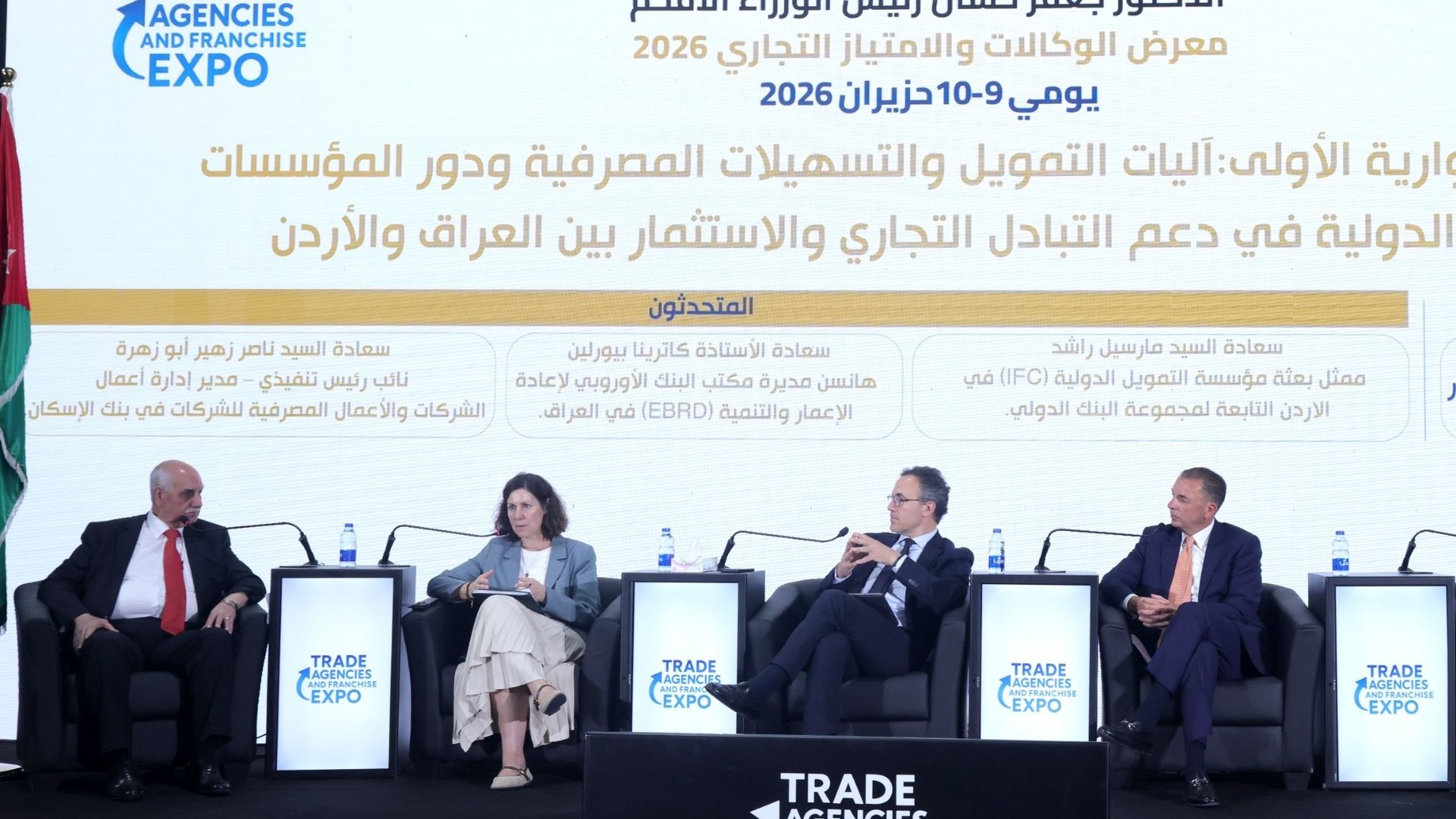
Amman, June 9 (Petra) — Financial and banking experts and
representatives of international financial institutions said economic
relations between Jordan and Iraq are witnessing steady growth,
supported by expanding banking cooperation and increasing interest
from international institutions in financing investment and
development projects in both countries.
Speaking during a dialogue session held on the sidelines of the 2026
Franchise and Trade Agencies Exhibition, participants stressed that
strengthening economic partnerships and expanding financing
opportunities for the private sector are key drivers for increasing
bilateral trade and creating new investment opportunities.
The session, titled “Financing Mechanisms, Banking Facilities and the
Role of International Financial Institutions in Supporting Trade and
Investment Exchange Between Iraq and Jordan,” highlighted the Iraqi
market’s potential across infrastructure, energy, industrial, and
services sectors.
Marcel Rashid, representative of the International Finance
Corporation (IFC) mission in Jordan, said regional economic
partnerships are among the most effective tools for promoting growth
and stimulating private-sector investment.
He noted that the IFC views Jordan and Iraq as part of an
interconnected economic system, making stronger cooperation between
the two countries essential to advancing development and generating
new investment opportunities.
Rashid said the IFC works through specialized teams in both countries
to support private-sector development and finance strategic projects,
adding that the institution continues to expand its investments and
programs aimed at fostering sustainable economic growth and job
creation.
He noted that the IFC has invested billions of dollars in Iraq in
recent years to support private-sector initiatives, infrastructure
projects, and financial services, while continuing efforts to expand
its investment portfolio in the country.
Rashid stressed that sustainable economic development requires close
cooperation among governments, the private sector, and international
financial institutions. He added that the IFC’s role extends beyond
financing to include technical and advisory support that helps
strengthen project implementation and private-sector competitiveness.
He also highlighted the IFC’s collaboration with the Iraqi government
on reforms designed to improve the investment climate, facilitate
capital flows, and attract additional investment into key sectors.
For her part, Director of the European Bank for Reconstruction and
Development (EBRD) office in Iraq Katarina Hansen said Iraq offers
significant investment opportunities for local, regional, and
international companies across a range of sectors.
She described Iraq as one of the region’s most promising markets,
noting that companies seeking growth and expansion can benefit from
partnerships with the Iraqi private sector and capitalize on
opportunities emerging across the economy.
Hansen said infrastructure remains one of the most attractive
investment areas, citing opportunities in transportation, logistics,
energy, electricity, telecommunications, and other productive and
service sectors.
She added that Iraq’s strategic geographic location enhances its role
as a regional trade and economic hub, increasing its attractiveness
to investors and businesses seeking regional expansion.
Hansen said international financial institutions are maintaining
ongoing dialogue with the Iraqi government to support development and
investment projects, emphasizing that the availability of
well-prepared projects accelerates access to financing and
implementation.
She noted that the EBRD is working alongside the World Bank Group and
other international partners to support Iraq’s development priorities
and maximize the impact of investment projects.
Hansen also stressed the importance of strengthening economic
partnerships and regional integration, saying enhanced cooperation
opens new opportunities for investors and companies, supports
economic growth, creates jobs, and advances sustainable development.
Meanwhile, Housing Bank Deputy Chief Executive Officer and Head of
Corporate and Banking Nasser Abu Zahra said amendments introduced by
the Central Bank of Jordan several years ago enabled Jordanian banks
to finance projects in Iraq under specific regulations. He noted that
previous regulations limited financing to projects within Jordan, but
the changes reflected the strategic importance of the Iraqi market to
bilateral economic relations.
Abu Zahra said Jordanian banks currently finance projects in the
energy, industrial, services, and technology sectors through a range
of financing instruments, including letters of credit, helping
facilitate trade and strengthen economic cooperation between Jordan
and Iraq.
//Petra// AJ