Jordan’s Q2 2026 GDP Expands 3.0%, Outperforming Regional Headwinds, International Forecasts
ENV-KUWAIT-SUSTAINABLITYKuwait strengthens environmental sustainability through strategic initiativesBy Zahra Al-Kadhmi
HLT-KUWAIT-SURGERYKuwait advances health sector with robotic, remote surgeryBy Mohammad Al-Moseb

Saudi Arabia’s Voluntary Carbon Market Fuels the Shift to a Low-Carbon

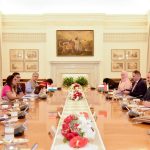
Khartoum, (SUNA) – Minister of Foreign Affairs and International Cooperation Ambassador Mohi-Eddin Salem affirmed that Sudanese diplomacy is working to strengthen the presence of the government’s vision in international forums and correct narratives that do not correspond to the realities of the situation in Sudan, pointing to indications of a growing response from a number of countries to Sudan’s position. In an interview with the Sudan News Agency (SUNA), to be published later, the minister said the government had followed the holding of meetings and gatherings by groups and envoys addressing Sudanese affairs in ways that may not correspond to what is actually happening on the ground and without involving the government as a party in those meetings. He said the government had taken the initiative to present its vision, beginning with the initiatives of the President of the Transitional Sovereignty Council (TSC) at the beginning of last year, which culminated in an initiative presented by the Prime Minister before the UN Security Council. He said the initiative was very clear and addressed the issues without ambiguity. The minister noted that many countries had begun responding to the Sudanese government’s vision, citing as indicators the accreditation of a number of European ambassadors, as well as a number of Sudanese ambassadors to European countries, in addition to delegations from Asia and Africa that had come to Khartoum, and delegations from the Peace and Security Council, the Great Lakes region, foreign ministers, and envoys. He said these were indicators of a response to the position put forward by the government and the vision through which it had begun to correct what the enemies, or some nationals who had sold themselves to foreign agendas, had been promoting. He said they had promoted the “two generals’ war” narrative and the question of who fired the first shot, noting that these narratives had been carefully deployed through platforms funded with huge amounts of money and with many people recruited to continue advancing various agendas. In the same context, the minister said: “We are aware of this and are coordinating on this with many friends and brothers in the region, because through our African, Arab, and Islamic affiliations, as well as our international affiliation, we have common ground with our brothers and friends, and we are all alert to such conspiracies.” Ambassador Mohi-Eddin Salem criticized what he described as a retreat from a number of fundamental principles upon which the international legal order and the United Nations system were founded, particularly the principles of non-interference in internal affairs, equality among states, and respect for human rights. He said Sudan had expressed these positions during its participation in the 81st session of the United Nations General Assembly, noting that many had spoken about the need for equality among states because this organization is for states standing shoulder to shoulder, and this must be understood by everyone. However, he said, the reality is not so. He added that foreign policy is primarily employed to serve the country’s higher interests, and that the country’s higher interests are the higher interests of the Sudanese people.BH/BH