Jordan’s Q2 2026 GDP Expands 3.0%, Outperforming Regional Headwinds, International Forecasts
ENV-KUWAIT-SUSTAINABLITYKuwait strengthens environmental sustainability through strategic initiativesBy Zahra Al-Kadhmi

HLT-KUWAIT-SURGERYKuwait advances health sector with robotic, remote surgeryBy Mohammad Al-Moseb

Saudi Arabia’s Voluntary Carbon Market Fuels the Shift to a Low-Carbon

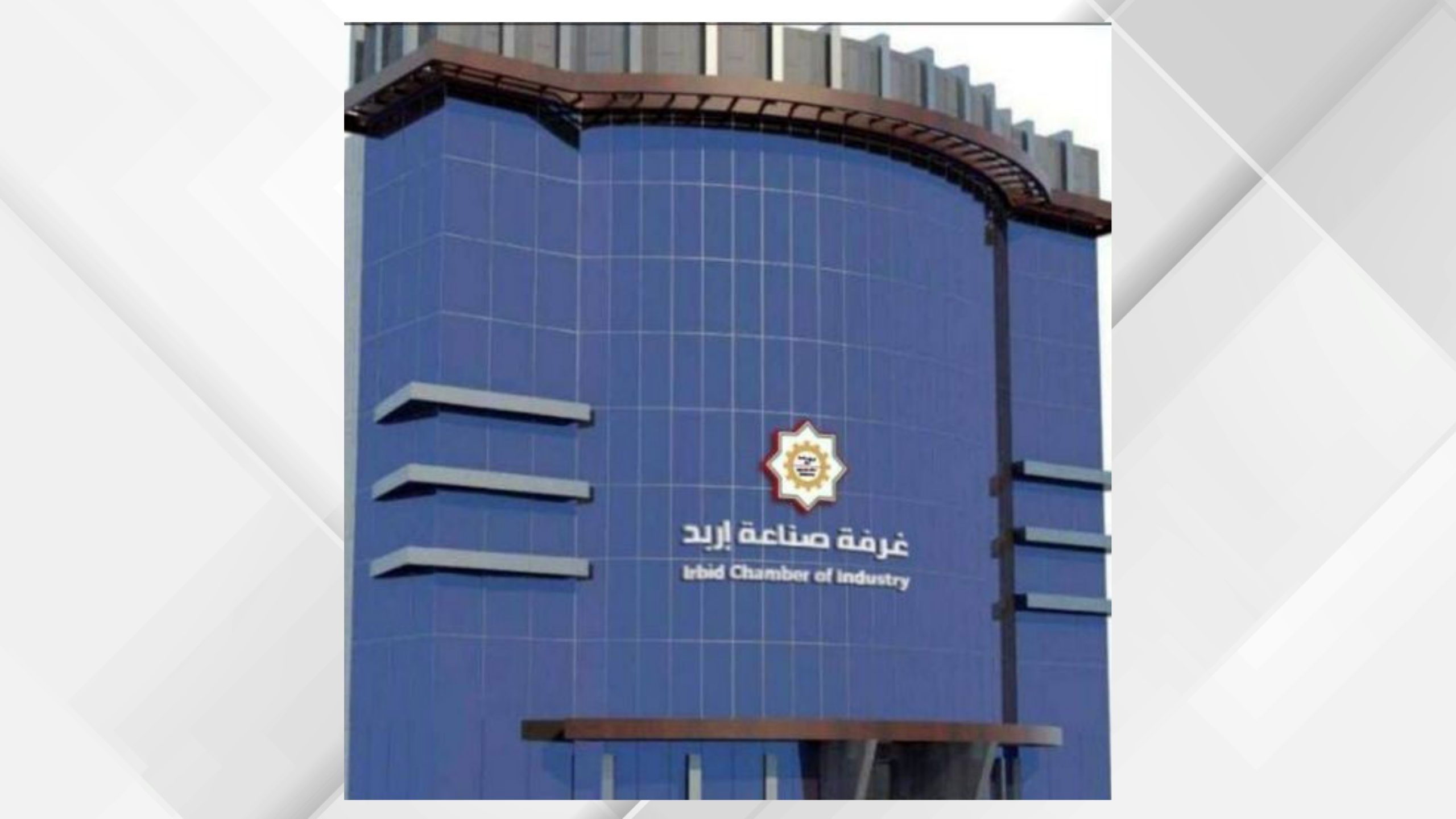
Irbid, May 18 (Petra) – Industrial export valuations originating from
the Irbid Chamber of Industry demonstrated significant macroeconomic
resilience during the first four months of 2026, registering an 8.3
percent year-on-year capital expansion.
Gross export values shifted upward to $355.771 million, compared to
$328.551 million deployed during the parallel baseline period in
2025.
Reflecting an expansion in underlying transactional velocity, the
aggregate volume of certificates of origin issued by the chamber
surged by 12.5 percent, climbing to 4,756 units through the end of
April 2026 against 4,226 during the previous fiscal cycle.
Sovereign industrial outputs across the Irbid Governorate remain
highly concentrated, with the textiles, leather, and garment
manufacturing cluster serving as the primary macroeconomic engine.
Sectoral contributions through the first four months of 2026 show
that leather and textiles captured the dominant share, exceeding $310
million and representing a 9 percent year-on-year expansion.
The agro-food, food processing, and livestock sector followed as the
second largest contributor at $23 million, while therapeutics and
medical supplies occupied the third position at $10.316 million.
Remaining industrial output was distributed among chemicals and
cosmetics at $6.406 million, plastics and rubber products at $2.781
million, construction materials and mining components at $1.151
million, electrical and engineering technology at $839,000, packaging
and paper consumables at $389,000, and standard mining sub-sectors at
$58,000.
The United States retained its status as the anchor trading partner
for Northern Jordan’s industrial base, absorbing over $234 million in
total export volume. Within the European theater, the Netherlands
imported $16 million, followed closely by Germany at $13 million.
Within regional Middle Eastern trade corridors, Saudi Arabia
functioned as the primary destination, capturing $10.109 million in
outbound industrial shipments.
Spatially, industrial special economic zones dominated the aggregate
output pipeline, with the Al-Hassan Industrial Estate capturing the
largest share of productive output by generating over $340 million of
total export values.
The CyberCity specialized zone followed with an export footprint of
$11.94 million, while the chamber’s central registry handled $3.099
million in non-localized cargo verification.
Hani Abu Hassan, Chairman of the Irbid Chamber of Industry, confirmed
to the Jordan News Agency (Petra) that the regional industrial sector
is experiencing measurable supply-side acceleration despite intense
macroeconomic shocks and trade route friction stemming from regional
geopolitical crises.
Abu Hassan explained that the export growth data offers empirical
validation of the manufacturing sector’s capacity to preserve its
production and distribution momentum amidst systemic regional supply
chain blockages.
He noted that the positive performance metrics demonstrate the
resilience of Jordan’s Northern industrial base under crisis
conditions, highlighting that institutional interventions designed to
streamline operational regulations have preserved the
cost-competitiveness of Jordanian industrial goods.
The chamber is currently working in partnership with ministerial
agencies and trade associations to diversify destination markets and
hedge against regional trade shocks by securing alternative
international consumer bases.
//Petra// AA