Saudi Arabia’s Voluntary Carbon Market Fuels the Shift to a Low-Carbon
Under UAE President’s directives, UAE launches urgent relief response for Ghana flood victims
Combating Desertification and Drought: Qatar a Model in Preserving Natural Resources, Establishing Environmental Stability
UAE allocates US$30 million for emergency humanitarian response in El Obeid, calls for civilian protection, safe humanitarian aid access in Sudan

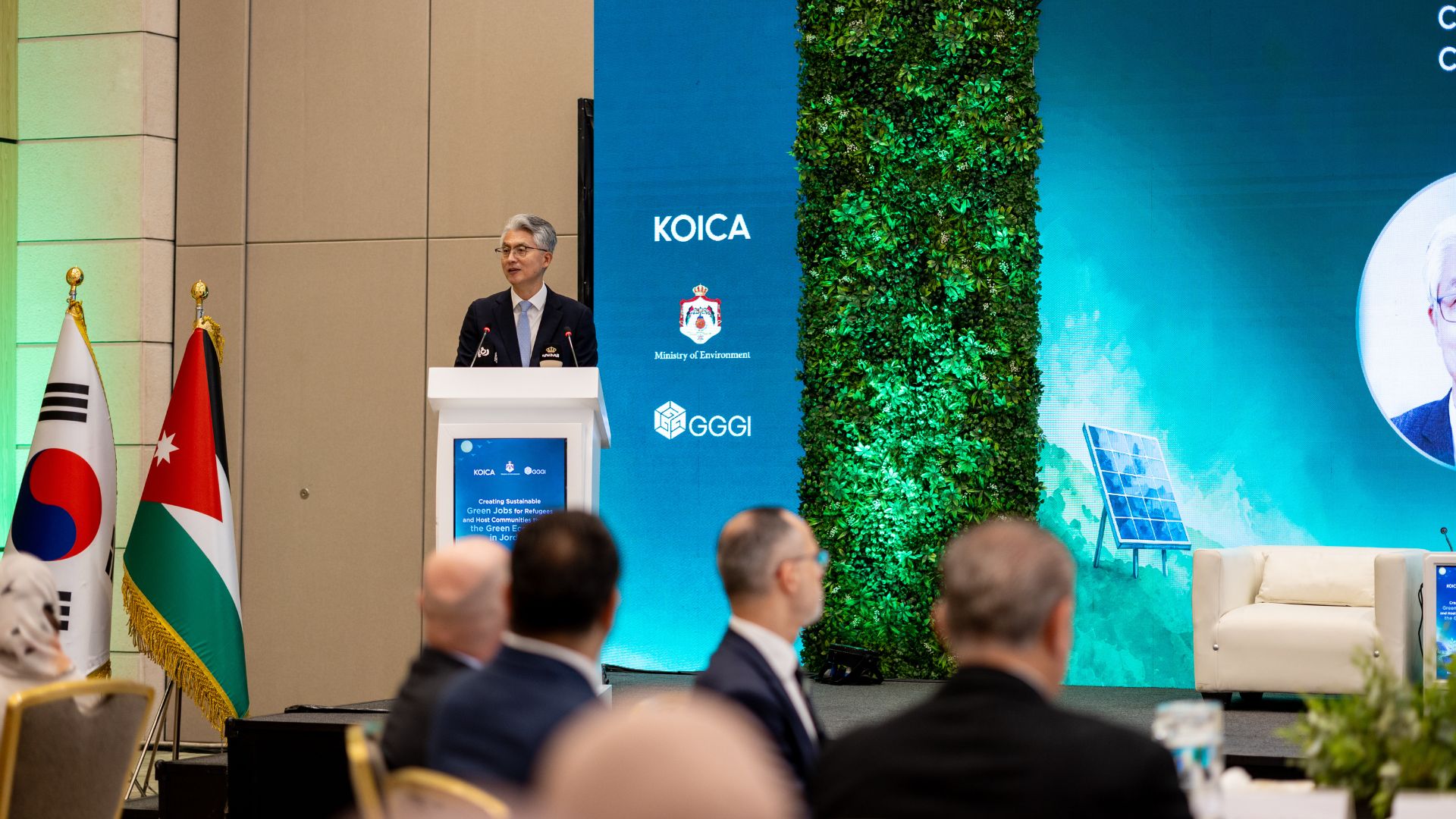
Amman, July 21 (Petra) – The Ministry of Environment, in cooperation
with the Global Green Growth Institute (GGGI), the Korea
International Cooperation Agency (KOICA), and Good Neighbors Jordan,
on Tuesday wrapped up the “Creating Sustainable Green Jobs for
Refugees and Host Communities through the Green Economy in Jordan”
project.
Implemented from 2023 to 2026, the project aimed to expand green
employment opportunities, empower women, young people, refugees, and
host communities, and support Jordan’s transition toward a more
inclusive and sustainable green economy.
Minister of Environment Ayman Suleiman, who sponsored the closing
ceremony, said green jobs are a national priority that combines
environmental protection, economic growth, and employment creation in
line with the Economic Modernization Vision and the Sustainable
Development Goals.
He said the project strengthened capacities of young people, women,
and entrepreneurs and supported the transition toward a “more
sustainable and inclusive” economy.
Suleiman said the project achieved “tangible” results by developing
green skills, promoting environmental entrepreneurship, and providing
incubation and acceleration programs for startups. He added that
these achievements provide a foundation for sustaining the project’s
impact and expanding green employment opportunities across the
Kingdom.
In turn, S.Korean Ambassador Kim Pil-woo said the project reflected
his country’s commitment to supporting “sustainable” development in
Jordan through $5.5 million in funding provided by KOICA.
He said the project demonstrated the importance of Jordanian-Korean
cooperation in education, vocational training, climate action, green
growth, and the empowerment of refugees and host communities.
GGGI Jordan Country Representative Christophe Assicot reviewed the
project’s main outcomes, announcing 1,649 beneficiaries completed
green-skills training programs, while 870 prospective entrepreneurs
received specialized training.
He added that 303 businesses joined incubation programs, while 22
companies benefited from acceleration programs, helping develop an
integrated national green employment ecosystem.
Assicot said the project also contributed to drafting Jordan’s first
National Green Employment Action Plan, which, once adopted, will
provide a “strategic” framework for guiding national green employment
efforts and strengthening coordination among stakeholders.
The closing ceremony, attended by Ministry of Environment
Secretary-General Omar Arabiyat, featured a discussion with several
beneficiaries, who shared their experiences in environmental, social,
and corporate governance reporting, green entrepreneurship, and
incubation and acceleration programs.
The beneficiaries highlighted the project’s positive impact on
developing their skills and improving their economic opportunities.
Concluding the event, the partners said the project’s completion
marked the beginning of a new phase of cooperation based on the
national partnerships, capacity-building efforts, knowledge products,
and green entrepreneurship support mechanisms developed through the
initiative.
They said these efforts would contribute to expanding sustainable
employment opportunities and supporting Jordan’s transition toward a
green economy.
//Petra// AO