ENV-KUWAIT-SUSTAINABLITYKuwait strengthens environmental sustainability through strategic initiativesBy Zahra Al-Kadhmi

HLT-KUWAIT-SURGERYKuwait advances health sector with robotic, remote surgeryBy Mohammad Al-Moseb

Saudi Arabia’s Voluntary Carbon Market Fuels the Shift to a Low-Carbon

Under UAE President’s directives, UAE launches urgent relief response for Ghana flood victims

Amman, July 28 (Petra) — Manufacturers and industry representatives
said the government’s continued rollout of natural gas infrastructure
to industrial zones will help lower production costs, improve the
competitiveness of locally manufactured goods, support export growth,
attract investment, and create employment opportunities.
In statements to the Jordan News Agency (Petra), they said the
inauguration of the natural gas station at Al-Quweira Industrial City
represents an important step in addressing one of the main challenges
facing the industrial sector, as energy costs remain a significant
component of manufacturing expenses.
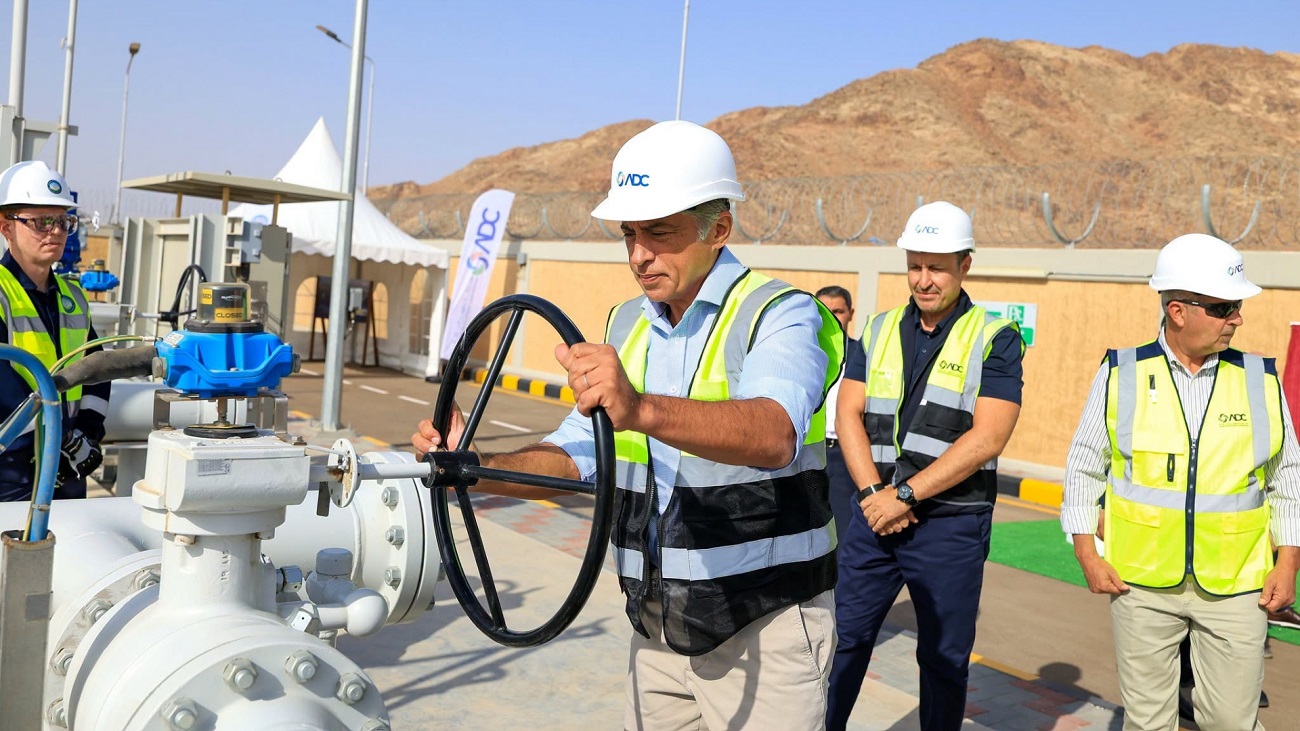
Prime Minister Jaafar Hassan inaugurated the natural gas station in
Al-Quweira Industrial City in Aqaba on Sunday as part of a government
strategy aimed at reducing energy costs by 35 to 60 percent in
industrial cities and clusters across the Kingdom. He also
inaugurated a natural gas station in Aqaba’s Southern Industrial Zone
to support manufacturers through lower energy costs.
The project to supply industrial cities with natural gas is designed
to strengthen the industrial sector, improve the competitiveness of
the national economy, attract investment, increase exports, support
environmental sustainability, and contribute to the objectives of
Jordan’s Economic Modernization Vision.
Mohammad Hassan Sumadi, Chief Business Development Officer at
Al-Omlaq Industrial Group, said the project reflects efforts to
remove obstacles facing manufacturers and provide the conditions
needed for industrial growth. He noted that Jordanian industry has
demonstrated its ability to access regional and international markets
and said continued investment in infrastructure, reliable energy
supplies, and a more competitive business environment would further
strengthen the sector.
Sumadi said extending natural gas to industrial areas represents a
long-term investment in the competitiveness of the national economy
by giving factories greater certainty in planning and expansion while
encouraging investors to establish new industrial projects or expand
existing ones, particularly in energy-intensive industries.
He added that lower operating costs and improved infrastructure would
enable manufacturers to increase production, expand exports, and
develop products with higher added value, strengthening Jordan’s
position as a competitive industrial destination.
According to Sumadi, investment in industrial infrastructure also
supports sustainable industrial growth, enables companies to
introduce new production lines, and creates additional employment
opportunities. He added that closer integration between energy and
industrial policies remains an important element in achieving the
targets of the Economic Modernization Vision and increasing
industry’s contribution to gross domestic product.
Jordan Chamber of Industry President Fathi Al-Jaghbir described the
Al-Quweira station as a strategic step to enhance the competitiveness
of Jordan’s industrial sector, noting that energy costs remain among
the industry’s most significant challenges.
He said energy accounts for an average of 30 to 35 percent of
industrial production costs and exceeds 40 percent in some
energy-intensive sectors, including chemicals, construction
materials, plastics, and mining. As a result, he said, reducing
energy costs would directly improve the competitiveness of Jordanian
products in both domestic and export markets.
Al-Jaghbir said the government’s strategy to reduce energy costs
through wider use of natural gas provides manufacturers with a more
efficient and stable energy source while reducing dependence on more
expensive conventional fuels.
He added that competitive energy prices would make industrial cities
more attractive to investors, particularly those operating in
energy-intensive industries, where energy availability and cost are
major considerations when selecting investment locations.
Al-Jaghbir said the benefits of lower energy costs would extend
beyond manufacturers by improving productivity, supporting industrial
expansion, increasing exports, and creating jobs, in line with the
objectives of the Economic Modernization Vision. He also called for
accelerating the extension of natural gas infrastructure to
industrial cities and clusters across the Kingdom to allow more
manufacturers to benefit from lower-cost energy while strengthening
energy security through diversified supply sources.
Jordan Investors Association President Mujahid Al-Rajabi said
providing natural gas to industrial zones is a key factor in
improving the competitiveness of Jordan’s industrial sector at both
the regional and international levels and in supporting exports.
He said the opening of the Al-Quweira station would improve
production efficiency and reduce factories’ operating costs,
contributing to higher product quality and stronger export
competitiveness.
Al-Rajabi described the project as the beginning of broader
initiatives to modernize the energy sector in support of Jordan’s
transition toward a greener economy based on innovation and
technology. He added that natural gas is a cleaner source of energy
than conventional industrial fuels and would help reduce carbon
emissions while supporting the country’s sustainable energy
objectives and environmental goals.
He also said reliable natural gas supplies would increase the
attractiveness of Aqaba’s industrial zone to both domestic and
foreign investors, stressing that cooperation between the public and
private sectors would help accelerate development projects and
strengthen the investment environment.
Saeed Rassas, President of the West and North Amman Industrial
Investors Association, said access to natural gas is one of the key
enablers of Jordan’s industrial sector. He said expanding energy
efficiency programs alongside wider use of natural gas could reduce
electricity consumption in industry by as much as 27 percent,
improving the competitiveness of Jordanian products, increasing
exports, and attracting additional industrial investment.
Rassas added that the Al-Quweira project provides a model that can be
expanded to other industrial cities and clusters across the Kingdom
in support of the Economic Modernization Vision, while strengthening
energy security, improving production efficiency, and supporting the
transition to a more sustainable and competitive industrial sector.
//Petra//WH